2,281 posters, 63 videos, 56 audios, 43 topics, 18 sessions, 6,174 authors, 2,323 institutions
ePostersLive by SciGen Technologies S.A. All rights reserved.
RCOG World Congress 2025
June 23 - 25, 2025 | ExCeL London, UK
PP.0104
Successful Outcomes of Maternal and New-born Health with Partnership with Community Midwives
Part of Topic
Global health/health policy
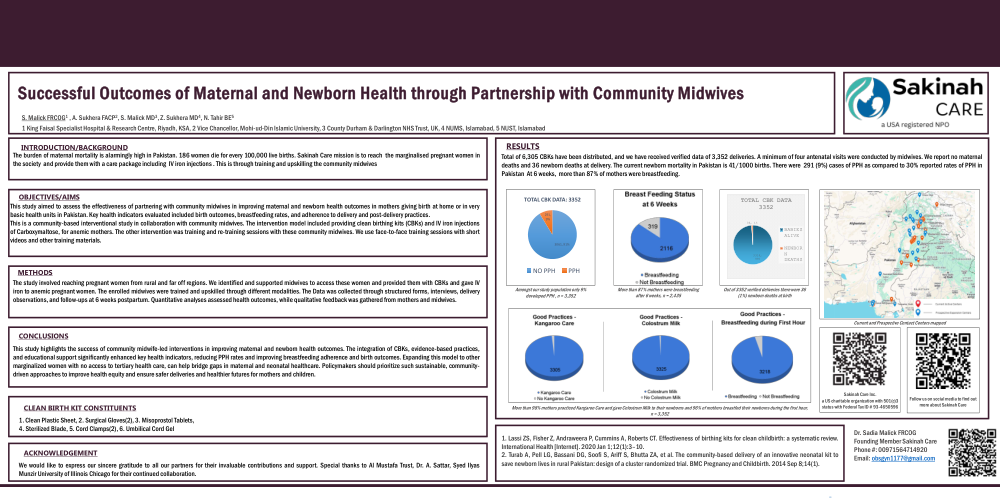
Successful Outcomes of Maternal and Newborn Health through Partnership with Community Midwives
Objective:
This study aims to assess the effectiveness of partnering with community midwives in improving maternal and newborn health outcomes in mothers giving birth at home or in very basic health units in Pakistan. Key health indicators evaluated included birth outcomes, breastfeeding rates, and adherence to delivery and post-delivery practices.
Design:
A community-based interventional study was conducted in collaboration with trained community midwives. The intervention model included providing clean birthing kits (CBKs) and IV iron injections of Carboxymaltose, for anemic mothers. The other intervention was training and re-training sessions with these community midwives. It was provided with face-to-face training sessions with short videos and other training materials. Midwives adhered to evidence-based delivery practices to ensure optimal outcomes.
Method:
The study involved reaching pregnant women from rural and far off regions. We identified and supported midwives to access these women and provided them with CBKs and gave IV iron to anemic pregnant women. The enrolled midwives were trained and upskilled through different modalities. The Data was collected through structured forms, interviews, delivery observations, and follow-ups at 6 weeks postpartum. Quantitative analyses assessed health outcomes, while qualitative feedback was gathered from mothers and midwives.
Results:
Total of 6,305 CBKs have been distributed, and we have received verified data of 3,352 deliveries. A minimum of four antenatal visits were conducted by midwives. We report no maternal deaths and 36 newborn deaths at delivery. The current newborn mortality in Pakistan is 41/1000 births. There were 291 (9%) cases of PPH as compared to 30% reported rates of PPH in Pakistan At 6 weeks, more than 87% of mothers were breastfeeding.
Midwives followed best practices during delivery, including:
- Using clean, sterilized disposable blades.
- High-quality disposable cord clamps for umbilical cord care.
- Sterilized surgical gloves for hygiene.
- Clean, transparent sheets for safe delivery.
These practices, combined with CBKs and video-based education, ensured safe deliveries and reduced infection risks.
Conclusions:
This study highlights the success of community midwife-led interventions in improving maternal and newborn health outcomes. The integration of CBKs, evidence-based practices, and educational support significantly enhanced key health indicators, reducing PPH rates and improving breastfeeding adherence and birth outcomes. Expanding this model to other marginalized women with no access to tertiary health care, can help bridge gaps in maternal and neonatal healthcare. Policymakers should prioritize such sustainable, community-driven approaches to improve health equity and ensure safer deliveries and healthier futures