2,281 posters, 63 videos, 56 audios, 43 topics, 18 sessions, 6,174 authors, 2,323 institutions
ePostersLive by SciGen Technologies S.A. All rights reserved.
RCOG World Congress 2025
June 23 - 25, 2025 | ExCeL London, UK
PP.0126
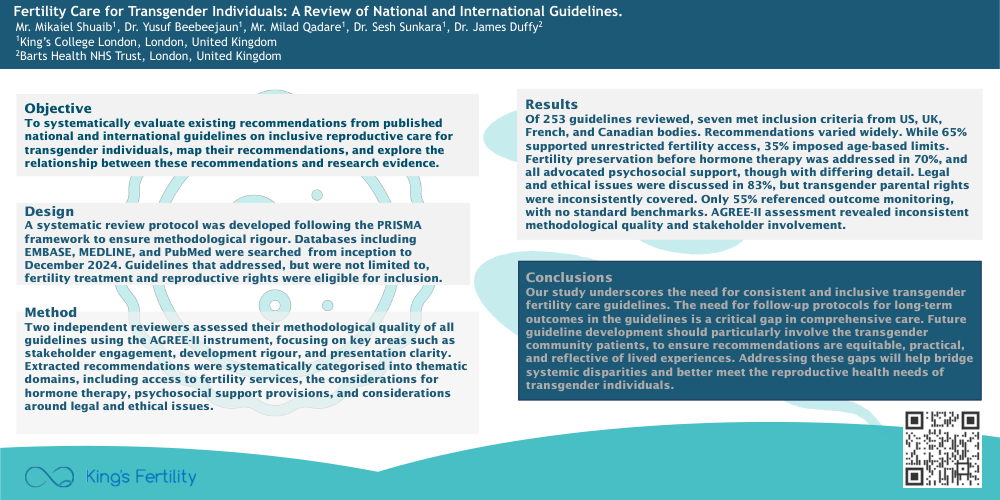
Fertility Care for Transgender Individuals: A Review of National and International Guidelines.
Poster Presenter
Authors
Mikaiel Shuaib, Yusuf Beebeejaun, Milad Qadare, Sesh Sunkara, James Duffy
Affiliations
Part of Topic
LGBTQ+
Fertility Care for Transgender Individuals: A Review of National and International Guidelines.
Mr. Mikaiel Shuaib1, Dr. Yusuf Beebeejaun1, Mr. Milad Qadare1, Dr. Sesh Sunkara1, Dr. James Duffy2
1King’s College London, London, United Kingdom
2Barts Health NHS Trust, London, United Kingdom
Results
Of 253 guidelines reviewed, seven met inclusion criteria from US, UK, French, and Canadian bodies. Recommendations varied widely. While 65% supported unrestricted fertility access, 35% imposed age-based limits. Fertility preservation before hormone therapy was addressed in 70%, and all advocated psychosocial support, though with differing detail. Legal and ethical issues were discussed in 83%, but transgender parental rights were inconsistently covered. Only 55% referenced outcome monitoring, with no standard benchmarks. AGREE-II assessment revealed inconsistent methodological quality and stakeholder involvement.
Objective
To systematically evaluate existing recommendations from published national and international guidelines on inclusive reproductive care for transgender individuals, map their recommendations, and explore the relationship between these recommendations and research evidence.
Design
A systematic review protocol was developed following the PRISMA framework to ensure methodological rigour. Databases including EMBASE, MEDLINE, and PubMed were searched from inception to December 2024. Guidelines that addressed, but were not limited to, fertility treatment and reproductive rights were eligible for inclusion.
Conclusions
Our study underscores the need for consistent and inclusive transgender fertility care guidelines. The need for follow-up protocols for long-term outcomes in the guidelines is a critical gap in comprehensive care. Future guideline development should particularly involve the transgender community patients, to ensure recommendations are equitable, practical, and reflective of lived experiences. Addressing these gaps will help bridge systemic disparities and better meet the reproductive health needs of transgender individuals.
Method
Two independent reviewers assessed their methodological quality of all guidelines using the AGREE-II instrument, focusing on key areas such as stakeholder engagement, development rigour, and presentation clarity. Extracted recommendations were systematically categorised into thematic domains, including access to fertility services, the considerations for hormone therapy, psychosocial support provisions, and considerations around legal and ethical issues.