2,281 posters, 63 videos, 56 audios, 43 topics, 18 sessions, 6,174 authors, 2,323 institutions
ePostersLive by SciGen Technologies S.A. All rights reserved.
RCOG World Congress 2025
June 23 - 25, 2025 | ExCeL London, UK
EP.2220
Optimising the Vulval 2-Week Referral Pathway: Streamlining Triage and Reducing Unnecessary Appointments
Poster Presenter
Part of Topic
Vulval disease
Optimising the Vulval 2-Week Referral Pathway: Streamlining Triage and Reducing Unnecessary Appointments
Objective:
Inexperience with vulval pathology amongst primary care clinicians results in high numbers of patients inappropriately referred on the suspected cancer pathway. This project assessed the current pathway to identify areas for improvement. Hypothesis: if referrals included photographs of the area of concern, it would allow benign pathology to be identified and removed from the fast-track pathway. These could be streamed to more appropriate, routine/urgent clinics or the patient and referrer would receive management instructions in the first instance to see if the condition could be improved without the need to be seen in secondary care. Streamlining referrals of those with obvious pathology would ensure patients who require in-person assessment are seen within the seven-day target.
Design:
Prospective study which included all vulvar cancer referrals over a 16-month period (Aug’23 – Dec ‘24)
Data was collected from the referral and the clinic notes
A specialist took 2 representative photographs which, along with the clinical information on the standardised referral form, would be sufficient for a diagnosis
Method:
Data was collected from the electronic record including; age, smoking status, performance status, ethnicity, BMI, co-morbidities, cervical smear history.
Photographs were taken with verbal consent.
Histology was reviewed where appropriate.
In the vulval clinic, an assessment was made if a diagnosis could have been made from the photograph
Results:
The average wait for clinic appointment was 11-days
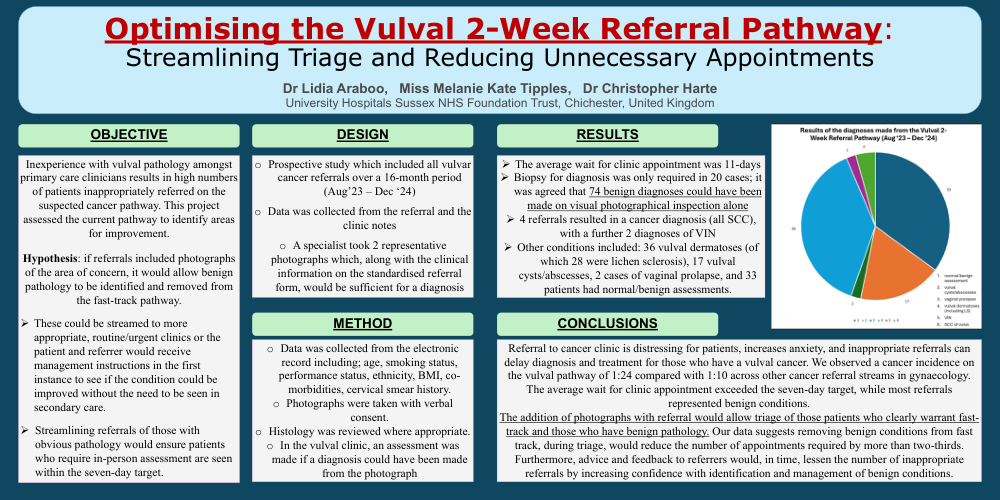
Biopsy for diagnosis was only required in 20 cases; it was agreed that 74 benign diagnoses could have been made on visual photographical inspection alone
4 referrals resulted in a cancer diagnosis (all SCC), with a further 2 diagnoses of VIN
Other conditions included: 36 vulval dermatoses (of which 28 were lichen sclerosis), 17 vulval cysts/abscesses, 2 cases of vaginal prolapse, and 33 patients had normal/benign assessments.
Conclusions:
Referral to cancer clinic is distressing for patients, increases anxiety, and inappropriate referrals can delay diagnosis and treatment for those who have a vulval cancer. We observed a cancer incidence on the vulval pathway of 1:24 compared with 1:10 across other cancer referral streams in gynaecology. The average wait for clinic appointment exceeded the seven-day target, while most referrals represented benign conditions.
The addition of photographs with referral would allow triage of those patients who clearly warrant fast-track and those who have benign pathology. Our data suggests removing benign conditions from fast track, during triage, would reduce the number of appointments required by more than two-thirds. Furthermore, advice and feedback to referrers would, in time, lessen the number of inappropriate referrals by increasing confidence with identification and management of benign conditions.