1,830 posters, 67 videos, 75 audios, 29 topics, 22 sessions, 4,727 authors, 1,697 institutions
ePostersLive by SciGen Technologies S.A. All rights reserved.
RCOG World Congress 2023
June 12 - 14, 2023 | London, UK

EP.0832
Incidence, Demographic Profile, and Outcomes of Primary Cesarean Delivery on Maternal Request
Poster Presenter
Authors
Affiliations
Part of Topic
Quality Improvement
Audio
Incidence, Demographic Profile, and Outcomes of Primary Cesarean Delivery on Maternal Request
Introduction
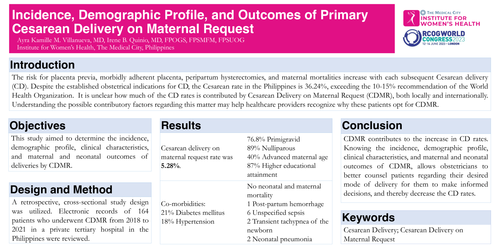
The risk for placenta previa, morbidly adherent placenta, peripartum hysterectomies, and maternal mortalities increase with each subsequent Cesarean delivery (CD). Despite the established obstetrical indications for CD, the Cesarean rate in the Philippines is 36.24%, exceeding the 10-15% recommendation of the World Health Organization. It is unclear how much of the CD rates is contributed by Cesarean Delivery on Maternal Request (CDMR), both locally and internationally. Understanding the possible contributory factors regarding this matter could help healthcare providers recognize why these patients opt for CDMR.
Objectives
This study aimed to determine the incidence, demographic profile, clinical characteristics, and maternal and neonatal outcomes of deliveries by CDMR.
Design and Method
A retrospective, cross-sectional study design was utilized. Electronic records of 164 patients who underwent CDMR from 2018 to 2021 in a private tertiary institution in the Philippines were reviewed.
Results
The incidence of CDMR is 5.28%. Among the population of CDMR, 76.83% were primigravid patients; 39.63% were advanced maternal age; and 86.59% have a college degree. The most common co-morbidities present were diabetes mellitus (21.34%) and hypertension (18.29%). Except for one case of post-partum hemorrhage, there were no other documented maternal morbidities or mortalities among the CDMR patients. No mortality was recorded among the newborns but there were 6 cases of unspecified sepsis, 2 cases of transient tachypnea of the newborn, and 2 cases of neonatal pneumonia, requiring neonatal intensive care unit admission.
Conclusion
CDMR contributes to the increase in CD rates. Knowing the incidence, demographic profile, clinical characteristics, and maternal and neonatal outcomes of CDMR, allows obstetricians to better counsel patients regarding their desired mode of delivery for them to make informed decisions, and thereby decrease the CD rates.