1,830 posters, 67 videos, 75 audios, 29 topics, 22 sessions, 4,727 authors, 1,697 institutions
ePostersLive by SciGen Technologies S.A. All rights reserved.
RCOG World Congress 2023
June 12 - 14, 2023 | London, UK

PP.0185
Benefits of a multi-disciplinary super-one-stop-vulval clinic
Poster Presenter
Part of Topic
Quality Improvement
Objective: To review the outcomes for patients in the development of a specialist multidisciplinary super-one-stop-vulval clinic
Design: Demand for specialist vulval clinic new appointments has increased to 52 weeks since the Covid pandemic. The complex nature of many vulval conditions, requires cross-disciplinary care and some patients may need to see several clinicians in parallel.1
Our team consisted of specialists in Gynaecology, Dermatology, Genito-urinary & HIV Medicine, Gynae-Oncology, Pelvic Health Physiotherapy and General Practitioners (GPs), alongside specialty trainees.
Method: We piloted a specialist one-stop vulval clinic with 30-minute face-to-face appointments, two specialists and one trainee in each room, with provision for medical photography and vulval biopsies.
All referrals were triaged, with individualized referral to the most appropriate specialist. Pre-clinic appointment letters outlined the service. Patients were then provided with education on their condition and a take-away personalised management plan.
The GP clinic letter detailed a diagnosis and management schedule. Consideration was given to patient initiated follow up (PIFU). Electronic and paper questionnaires were distributed to patients as part of a service improvement review.
Results:
A total of 69 women were given appointments, of which 7 (10%) did not attend.
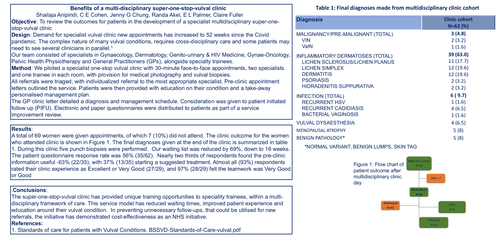
Diagnoses varied with VIN (2), VaIN (1) lichen sclerosus/planus (11), lichen simplex (12), vulval eczema/irritant/seborrheic dermatitis (12), vulval psoriasis (2), vulval dysesthesia (4), post-menopausal atrophy (5), hidradenitis suppurativa (2), recurrent HSV (1), recurrent candidiasis (4), bacterial vaginosis (1), normal variant (2), skin tag (1), benign lumps (2).
Over two thirds of patients were discharged (43, 69%). Only 14 (22%) required follow-up and 5 (8%) offered PIFU. Five punch biopsies were performed. Our waiting list was reduced by 69%, down to 16 weeks.
The patient questionnaire response rate was 56% (35/62). Nearly two thirds of respondents found the pre-clinic information useful -63% (22/35), with 37% (13/35) starting a suggested treatment. Almost all (93%) respondents rated their clinic experience as Excellent or Very Good (27/29), and 97% (28/29) felt the teamwork was Very Good or Good.
Conclusions:
The super-one-stop-vulval clinic has provided unique training opportunities to speciality trainees, within a multi-disciplinary framework of care. This service model has reduced waiting times, improved patient experience and education around their vulval condition. In preventing unnecessary follow-ups, that could be utilised for new referrals, the initiative has demonstrated cost-effectiveness as an NHS initiative
References:
1. Standards of care for patients with Vulval Conditions. BSSVD-Standards-of-Care-vulval.pdf