1,830 posters, 67 videos, 75 audios, 29 topics, 22 sessions, 4,727 authors, 1,697 institutions
ePostersLive by SciGen Technologies S.A. All rights reserved.
RCOG World Congress 2023
June 12 - 14, 2023 | London, UK

EP.0160
Trauma-informed Adaptations to Routine Gynaecological Care of Women who Experienced Sexual Violence
Poster Presenter
Authors
Affiliations
Part of Topic
Hot Topics (Emerging research/issues) in Gynaecology
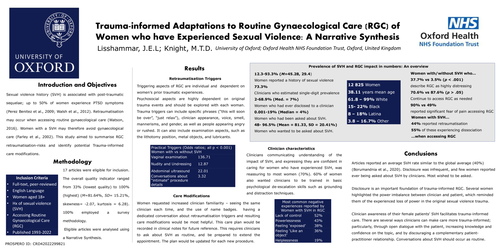
Trauma-informed adaptations to Routine Gynaecological Care (RGC) of Women who have experienced sexual violence: A Narrative Synthesis
Lisshammar, J.E.L; Knight, M.T.D
Introduction
Sexual violence history (SVH) is associated with post-traumatic sequelae; up to 50% of women experience PTSD symptoms (Perez Benitez et al., 2009; Walsh et al., 2012). Retraumatisation may occur when accessing routine gynaecological care (Watson, 2016). Women with a SVH may therefore avoid gynaecological care (Farley et al., 2002). This study aimed to summarise RGC retraumatisation-risks and identify potential Trauma-informed care modifications.
Methodology
17 articles were eligible for inclusion. The overall quality indicator ranged from 33% (lowest quality) to 100% (highest) (M=81.64%, SD= 15.21%, skewness= -2.07, kurtosis = 6.28). 100% employed a survey methodology.
Eligible articles were analysed using a Narrative Synthesis.
Results
Retraumatisation triggers
Triggering aspects of RGC are individual and dependent on women's prior traumatic experiences.
Psychosocial aspects are highly dependent on original trauma events and should be explored with each woman. Trauma triggers can include specific phrases (“this will soon be over”, “just relax”), clinician appearance, voice, smell, mannerisms, and gender, as well as people appearing angry or rushed. It can also include examination aspects, such as the lithotomy position, metal objects, and lubricants.
Care Modifications
Women requested increased clinician familiarity – seeing the same clinician each time, and the use of name badges. having a dedicated conversation about retraumatisation triggers and resulting care modifications would be most helpful. This care plan would be recorded in clinical notes for future reference. This requires clinicians to ask about SVH as routine, and be prepared to extend the appointment. The plan would be updated for each new procedure.
Clinician Characteristics
Clinicians communicating understanding of the impact of SVH, and expressing they are confident in caring for women who have experienced SVH, was reassuring to most women (70%). 60% of women also wanted clinicians to be trained in basic psychological de-escalation skills such as grounding and distraction techniques.
Conclusions
Articles reported an average SVH rate similar to the global average (40%) (Borumandnia et al., 2020). Disclosure was infrequent, and few women reported ever being asked about SVH by clinicians. Most wished to be asked.
Disclosure is an important foundation of trauma-informed RGC. Several women highlighted the power imbalance between clinician and patient, which reminded them of the experienced loss of power in the original sexual violence trauma.
Clinician awareness of their female patients’ SVH facilitates trauma-informed care. There are several ways clinicians can make care more trauma-informed; particularly, through open dialogue with the patient, increasing knowledge and confidence on the topic, and by discouraging a complementary patient-practitioner relationship. Conversations about SVH should occur as routine.