1,830 posters, 67 videos, 75 audios, 29 topics, 22 sessions, 4,727 authors, 1,697 institutions
ePostersLive by SciGen Technologies S.A. All rights reserved.
RCOG World Congress 2023
June 12 - 14, 2023 | London, UK

EP.1432
Two-Cycle Audit on Diagnosis and Outcomes of Gestational Diabetes Patients at WSH
Poster Presenter
Authors
Affiliations
Part of Topic
Quality Improvement
Two-Cycle Audit on Diagnosis and Outcomes of GDM Patients at WSH
Introduction
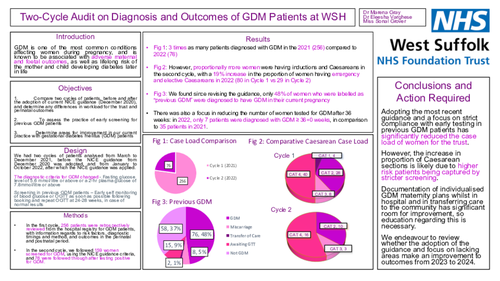
GDM is one of the most common conditions affecting women during pregnancy, and is known to be associated with adverse maternal and foetal outcomes, as well as lifelong risk of the mother and child developing diabetes later in life
Objectives
1. Compare two cycles of patients, before and after the adoption of current NICE guidance (December 2020), and determine any differences in workload for the trust and perinatal outcomes
2. To assess the practice of early screening for previous GDM patients
3. Determine areas for improvement in our current practice with gestational diabetes mellitus (GDM) patients
Design
We had two cycles of patients analysed from March to December 2021, before the NICE guidance from December 2020 was adopted, and from January to October 2022, after which the NICE guidance was applied.
The diagnostic criteria for GDM changed - Fasting glucose level of 5.6 mmol/litre or above or a 2-hr plasma glucose of 7.8mmol/litre or above
Screening in previous GDM patients – Early self monitoring of blood glucose or OGTT as soon as possible following booking and repeat OGTT at 24-28 weeks, in case of normal results
Methods
Results
Conclusions and Action Required
Adopting the most recent guidance and a focus on strict compliance with early testing in previous GDM patients has significantly reduced the case load of women for the trust.
However, the increase in proportion of Caesarean sections is likely due to higher risk patients being captured by stricter screening.
Documentation of individualised GDM maternity plans whilst in hospital and in transferring care to the community has significant room for improvement, so education regarding this is necessary.
We endeavour to review whether the adoption of the guidance and focus on lacking areas make an improvement to outcomes from 2023 to 2024.