1,830 posters, 67 videos, 75 audios, 29 topics, 22 sessions, 4,727 authors, 1,697 institutions
ePostersLive by SciGen Technologies S.A. All rights reserved.
RCOG World Congress 2023
June 12 - 14, 2023 | London, UK

EP.1188
ESTH Maternity services aspirations and outcomes in a DGH setting
Poster Presenter
Part of Topic
Quality Improvement
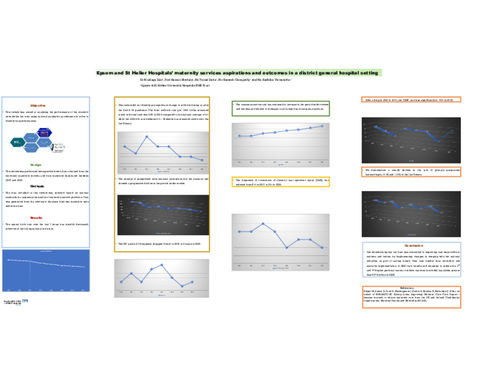
Epsom and St Helier Hospitals' maternity services aspirations and outcomes in a district general hospital setting
Objective:
This review was aimed at analysing the performance of the obstetric units within the trust using national standards as reference in order to identify our performances.
Design:
This review was performed retrospectively with data obtained from the electronic maternity records and trust maternity dashboard between 2015 and 2022.
Methods:
The data included in this review was selected based on national standards for assessing the quality of maternity service provision. Data was generated from the electronic database from two maternity units within the trust.
Results:
The annual birth rate over the last 7 years has steadily decreased, reflective of the falling national birth rate.
This review did not identify any significant change in stillbirth during or after the Covid 19 pandemic. The term stillbirth rate per 1000 births remained stable in the unit and was 2.88 in 2022 compared to the national average of 4.1 while the stillbirth rate between 24 – 36 weeks has remained stable over the last 5 years.
The number of unexpected term neonatal admissions into the neonatal unit showed a progressive decline in the period under review.
The HIE grade 2/3 frequency dropped from 6 in 2019 to 2 cases in 2022.
The caesarean section rate has continued to increase in the period under review and this was attributable to increases in all categories of caesarean sections.
The frequency of occurrence of obstetric anal sphincter injury (OASI) has reduced from 5% in 2017 to 2% in 2022.
After a drop in 2021 to 61%, our VBAC rate rose significantly to 73% in 2022.
We demonstrate a steady decline in the rate of primary postpartum haemorrhage, >1.5L and >2.0L in the last 5 years.
Conclusion:
Our review shows that our trust was committed to improving care we provide to mothers and babies by implementing changes in keeping with the national initiatives as part of saving baby’s lives care bundle fetal morbidity and mortality. Implementation of OASI care bundle and measures to reduce the 3rd and 4th degree perineal trauma to reduce maternal morbidity has shown greater than 50th decline in OASI.