358 posters, 97 topics, 122 sessions, 958 authors, 239 institutions
ePostersLive by SciGen Technologies S.A. All rights reserved.
79th PostGraduate Assembly in Anesthesiology 2025
December 12 - 15, 2025 | New York City

3131
Prevalence and Predictors of Substance Use in a Chronic Pain Outpatient Clinic: A Retrospective Cohort Study
Poster Presenter
Part of Topic
Pain Medicine
Introduction
-
Opioids remain essential for pain management but contribute to addiction and overdose crises.In 2022, 82,000 opioid-involved deaths occurred in the United States despite declining prescription rates.
-
Chronic pain affects a growing portion of adults, with 61.4 percent reporting persistent pain between 2019 and 2020.
-
Polysubstance use, or the concurrent use of multiple substances, increases addiction risk. About 72.8 percent of opioid-positive patients also test positive for another substance.
-
The CDC recommends routine drug screening in chronic pain clinics to identify risk patterns and guide safer prescribing.
Methods
-
Study Design: Retrospective cohort study of 200 new patients (July 2022 to February 2024) at Columbia Pain Center. All patients underwent saliva or urine drug screening upon intake
-
Variables: Demographics including age, sex, race, ethnicity, and prior pain medication use
-
Outcome: Positive drug test for opioids, marijuana, or other substances
-
Analysis: associations between demographics and substance positivity were evaluated using regression analysis
Results
After analyzing 200 drug screens:
-
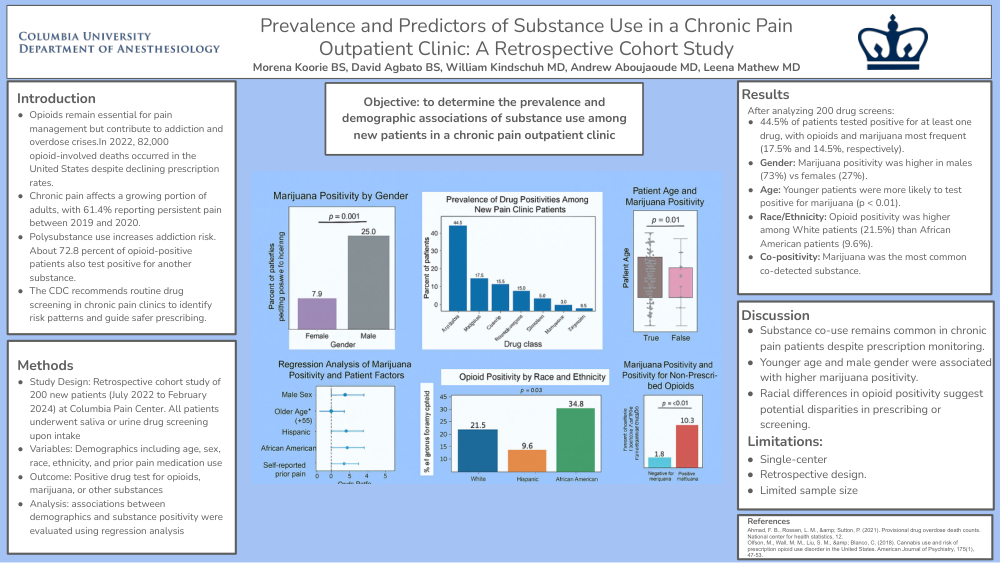
44.5% of patients tested positive for at least one drug, with opioids and marijuana most frequent (17.5% and 14.5%, respectively).
-
Gender: Marijuana positivity was higher in males (73%) vs females (27%).
-
Age: Younger patients were more likely to test positive for marijuana (p < 0.01).
-
Race/Ethnicity: Opioid positivity was higher among White patients (21.5%) than African American patients (9.6%).
-
Co-positivity: Marijuana was the most common co-detected substance.
Discussion
-
Substance co-use remains common in chronic pain patients despite prescription monitoring.
-
Younger age and male gender were associated with higher marijuana positivity.
-
Racial differences in opioid positivity suggest potential disparities in prescribing or screening.
Limitations:
-
Single-center, retrospective design.
-
Limited sample size.
Possible underreporting of substance use.
-
-
-