358 posters, 97 topics, 122 sessions, 958 authors, 239 institutions
ePostersLive by SciGen Technologies S.A. All rights reserved.
79th PostGraduate Assembly in Anesthesiology 2025
December 12 - 15, 2025 | New York City

3087
Lipid Emulsion Reverses Ventricular Repolarization Disturbances More Effectively After Ropivacaine than Levobupivacaine Toxicity
Poster Presenter
Part of Topic
Regional and Acute Pain
Title: Lipid Emulsion Reverses Ventricular Repolarization Disturbances More Effectively After Ropivacaine than Levobupivacaine Toxicity
Introduction:
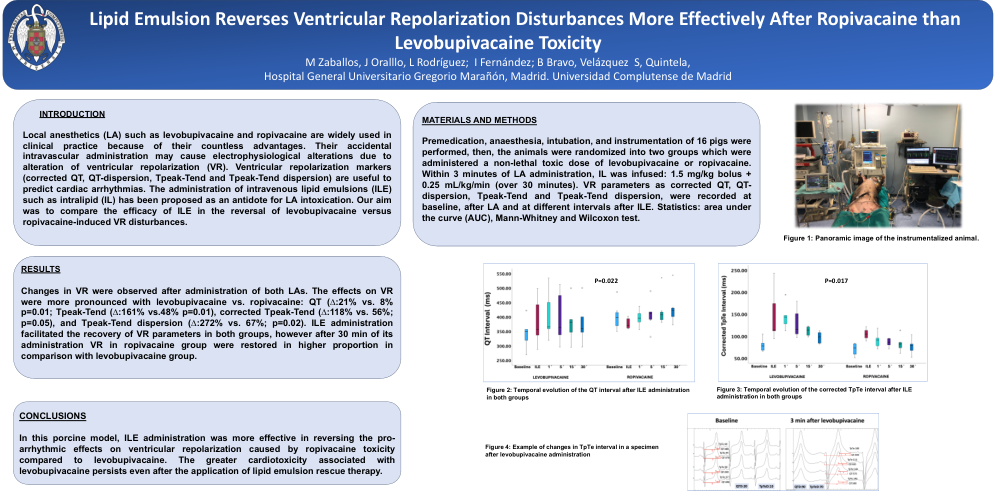
Accidental intravascular injection of local anesthetics (LAs) like levobupivacaine and ropivacaine can trigger severe cardiac arrhythmias by altering ventricular repolarization (VR). Intravenous lipid emulsion (ILE) is the established antidote for LA-induced systemic toxicity. This study aimed to compare the efficacy of ILE in reversing VR disturbances caused by toxic doses of levobupivacaine versus ropivacaine, using electrocardiographic markers such as the corrected QT interval, QT dispersion, T-peak to T-end interval (Tp-e), and Tp-e dispersion.
Methods:
Sixteen anesthetized and instrumented pigs were randomized into two groups (n=8 each). A non-lethal toxic dose of either levobupivacaine or ropivacaine was administered intravenously. Three minutes following LA administration, an ILE infusion (1.5 mg/kg bolus followed by 0.25 mL/kg/min for 15 minutes) was initiated. VR parameters were recorded at baseline, post-LA administration, and at several intervals after ILE infusion. The area under the curve (AUC) was analyzed, and statistical comparisons were performed using Mann-Whitney and Wilcoxon tests.
Results:
Both LAs induced significant alterations in VR parameters. The effects were markedly more pronounced with levobupivacaine compared to ropivacaine, respectively, in QT interval (Δ: 21% vs. 8%, p=0.01), Tp-e interval (Δ: 161% vs. 48%, p=0.01), corrected Tp-e (Δ: 118% vs. 56%, p=0.05), and Tp-e dispersion (Δ: 272% vs. 67%, p=0.02). While ILE administration facilitated VR recovery in both groups, parameters in the ropivacaine group were restored to a significantly greater extent 30 minutes post-infusion compared to the levobupivacaine group.
Conclusion:
In this porcine model, ILE administration was more effective in reversing the pro-arrhythmic effects on ventricular repolarization caused by ropivacaine toxicity compared to levobupivacaine. The greater cardiotoxicity associated with levobupivacaine persists even after the application of lipid emulsion rescue therapy.