358 posters, 97 topics, 122 sessions, 958 authors, 239 institutions
ePostersLive by SciGen Technologies S.A. All rights reserved.
79th PostGraduate Assembly in Anesthesiology 2025
December 12 - 15, 2025 | New York City

3045
Biomarker Analysis of Mechanically Ventilated Adults using Propofol or Dexmedetomidine
Poster Presenter
Authors
Affiliations
Part of Topic
Basic Research - Critical Care
Biomarker Analysis of Mechanically Ventilated Adults using Propofol or Dexmedetomidine
Authors: Sonali Shirali, MS, Christopher Hughes, MS, MD, Christina Boncyk, MD
BACKGROUND:
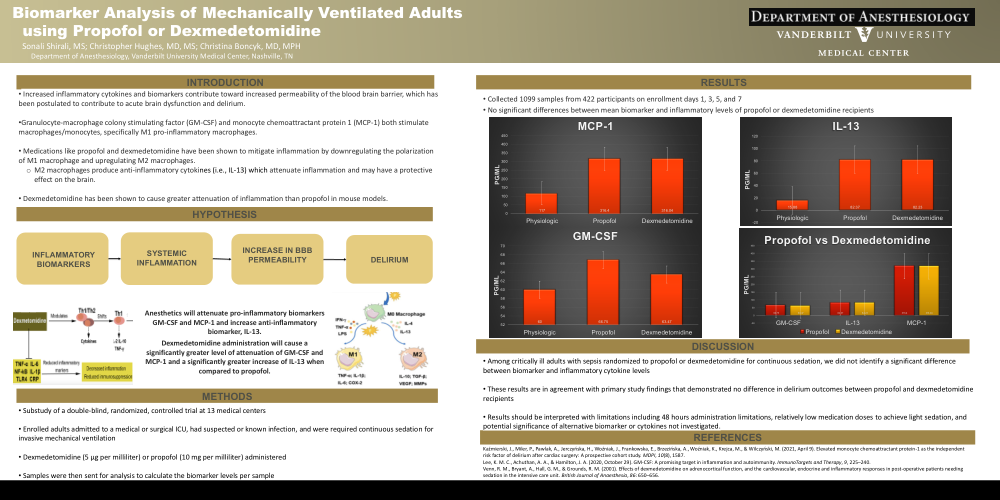
Increased inflammatory cytokines and biomarkers have been related to the degradation of the blood brain barrier. The fragility of this barrier can increase the number of proteins that can enter the central nervous system circulation, which has been postulated to cause brain dysfunction like delirium. GM-CSF, granulocyte-macrophage colony stimulating factor, and MCP-1, monocyte chemoattractant protein 1, both stimulate pro-inflammatory macrophages. Medications like propofol and dexmedetomidine have been shown to mitigate inflammation by downregulating pro-inflammatory macrophages. Anti-inflammatory macrophages produce cytokines like IL-13 which attenuate inflammation and thus have a protective effect on the brain. Dexmedetomidine has been shown to cause greater attenuation of inflammation than propofol in mouse models.
METHODS:
Samples that were analyzed were from a double-blind, randomized, controlled trial conducted at 13 different medical centers. The population of this trial includes 422 adults who were sequentially admitted to a medical or surgical ICU, with suspected or known infection, and were treated with continuous sedation for invasive mechanical ventilation. The medication used for sedation was either dexmedetomidine (5 μg per milliliter) or propofol (10 mg per milliliter). The samples from this trial were collected on enrollment days 1, 3, 5, and 7 then sent for analysis to calculate the biomarker levels per sample.
RESULTS:
The results indicate the approximate baseline physiologic rate for MCP-1, GM-CSF, and IL-13 are significantly less than biomarkers of critically ill adults with sepsis. This highlights that an inflammatory state results in a subsequent increase in the biomarkers studied. The sample population is randomized to propofol or dexmedetomidine for continuous sedation, we did not identify a significant difference between biomarker and inflammatory cytokine levels. These results agree with primary study findings that demonstrated no difference in delirium outcomes between propofol and dexmedetomidine recipients.
CONCLUSION:
Analyzing the inflammation pathway can help determine how acute brain dysfunction and delirium develops. The confirmation of this correlation can provide mechanistic pathways to attenuate the inflammatory response to help reduce the risk for brain disease. Should one medication prove to be more efficient in attenuating the inflammatory response, further prospective work on implications among high-risk participants can be formulated to study. This can encourage further research into regulating the inflammatory response to protect the brain from developing acute dysfunction, including delirium. Results should be interpreted with limitations including 48 hours administration limitations, relatively low medication doses to achieve light sedation, and potential significance of alternative biomarker or cytokines not investigated.