197 posters, 15 videos, 31 sessions, 510 authors
ePostersLive by SciGen Technologies S.A. All rights reserved.
2026 AO Annual Meeting
Conference ePosters

P174
The Long-term Impact of Implant-supported Restorations on Adjacent and Surrounding Natural Teeth: A Retrospective Longitudinal Study
Poster Presenter
Part of Topic
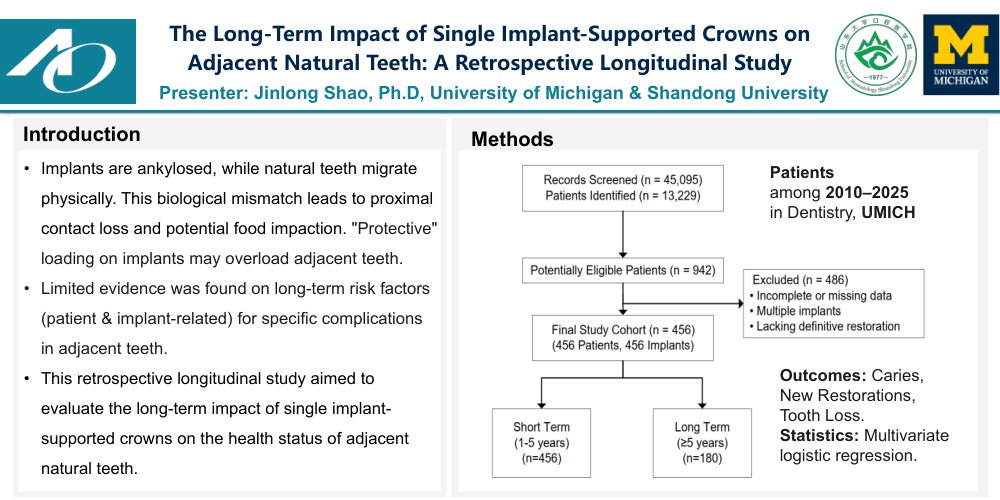
The Long-Term Impact of Single Implant-Supported Crowns on Adjacent Natural Teeth: A Retrospective Longitudinal Study
Objective: This retrospective longitudinal study aimed to evaluate the long-term impact of single implant-supported crowns on the health status of adjacent natural teeth.
Methods: A total of 456 subjects with single implant-supported crowns were assessed clinically and radiographically. The clinical status (caries, new restorations, tooth loss) of teeth adjacent to implants was compared against control teeth in other quadrants. Data from 1-year post-loading served as the baseline. Multivariate analyses were used to assess the risk of clinical deterioration over short-term (1-5 years) and long-term (5-15 years) follow-ups, considering patient and implant-related factors.
Results: The study followed 456 implants (mean 3.88 years), 180 of which were followed long-term (mean 8.90 years). Complication rates for adjacent teeth were 8.0% (short-term) and 15.0% (long-term), a frequency two- to three-fold higher than controls. The odds ratio (OR) of complications for adjacent teeth were significantly elevated in both short-term (OR 2.92–3.65) and long-term (OR 2.16–2.57) analyses. Tooth loss risk was exceptionally high short-term (OR 5.50–10.88) but became non-significant long-term. Protective factors included long implants (≥13 mm) for mesial restorations (OR 0.17) and bone-level implants for distal complications (OR 0.34–0.46), while detrimental factors included diabetes for mesial restorations (OR 3.51) and bruxism for short-term distal caries (OR 7.90).
Conclusion: Single implant-supported restorations are associated with a significantly increased risk of adverse outcomes, including caries, new restorations, and tooth loss, for adjacent natural teeth. The risk is most pronounced within the first five years post-loading but remains a clinical concern long-term.