197 posters, 15 videos, 31 sessions, 510 authors
ePostersLive by SciGen Technologies S.A. All rights reserved.
2026 AO Annual Meeting
Conference ePosters

P157
An Emerging Protocol Using 100% Digital Workflow for Immediate FP1 Full-arch Fixed Implant Rehabilitation in 24 Hours
Poster Presenter
Authors
Part of Topic
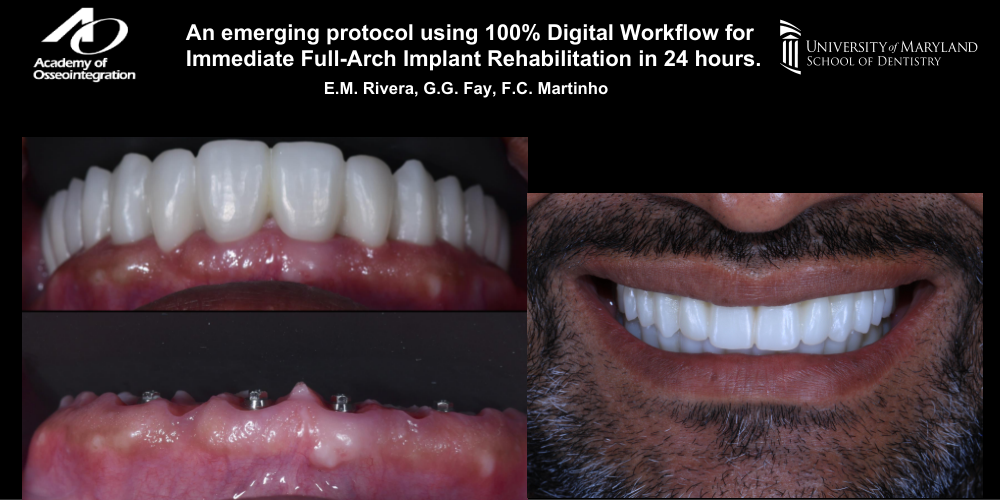
An emerging protocol using 100% Digital Workflow forImmediate Full-Arch Implant Rehabilitation in 24 hours.
E.M. Rivera, G.G. Fay, F.C. Martinho - University of Maryland School of Dentistry.
Introduction:
This novel protocol represents a fully digital, biologically guided workflow for the immediate screw-retained full-arch rehabilitation. The protocol integrates advanced three-dimensional imaging, photogrammetry, virtual design, and in-house manufacturing to deliver a natural-appearing FP1-type fixed prosthesis within 24 hours of surgery
Methods:
This fully digital protocol was utilized in twelve patients integrating seven key digital steps a) digital data acquisition; b) facial-driven smile design; c) prosthetically driven implant planning and surgical guide design; d) guided surgical placement; e) photogrammetry records; f) CAD design and production; and g) next-day delivery of the full-arch FP1 implant screw-retained immediate prosthesis. Passive seating, esthetic integration, and occlusal precision of the delivered prosthesis were verified using digital verification scans.Definitive FP1 implant-supported, screw-retained monolithic zirconia prostheses were inserted after three months
Results:
This protocol achieved a 24 hour delivery of the fixed prostheses for all the patients. Qualitative digital comparison of post-operative intraoral scans with the planned CAD prosthesis demonstrated consistency within the fully digital workflow.
Conclusion: The goal of this novel fully digital workflow is to preserve the patient’s natural anatomy, bone and soft tissue harmony. This workflow maintains true digital continuity from diagnosis, implant planning and prosthesis delivery with patient comfort without the need for analog steps that could introduce inaccuracies.