226 posters, 5 topics, 20 sessions, 599 authors, 292 institutions
ePostersLive by SciGen Technologies S.A. All rights reserved.
Obstetric Anaesthesia Annual Scientific Meeting 2026
14-15 May 2026 | Liverpool Convention Centre

7159552
Amniotic fluid embolism in an elective caesarean section
Part of Topic
Case report
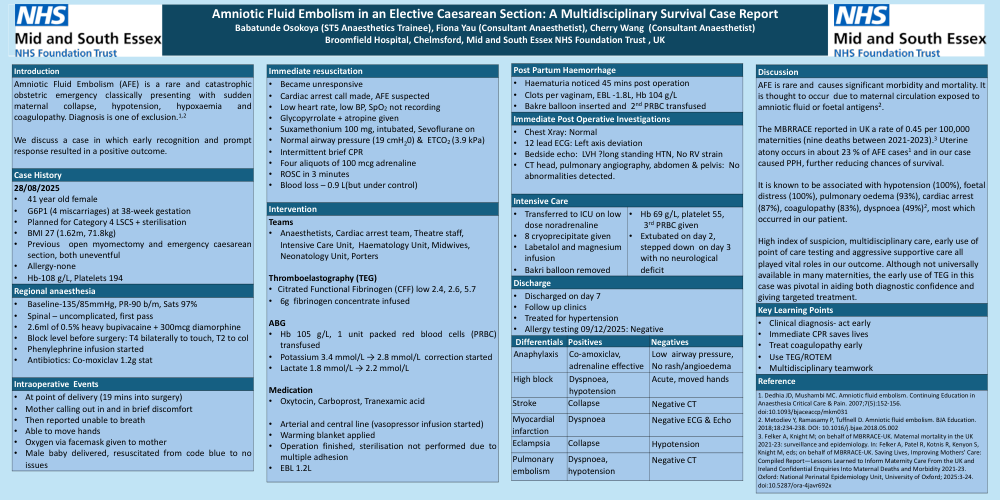
Amniotic Fluid Embolism in an Elective Caesarean Section: A Multidisciplinary Survival Case Report
Babatunde Osokoya (ST5 Anaesthetics Trainee), Fiona Yau (Consultant Anaesthetist),
Cherry Wang (Consultant Anaesthetist)
Broomfield Hospital, Chelmsford, Mid and South Essex NHS Foundation Trust , UK
Introduction
Amniotic Fluid Embolism (AFE) is a rare and catastrophic obstetric emergency classically presenting with sudden maternal collapse, hypotension, hypoxaemia and coagulopathy. Diagnosis is one of exclusion.1,2
We discuss a case in which early recognition and prompt response resulted in a positive outcome.
Case History
28/08/2025
41 year old female
G6P1 (4 miscarriages) at 38-week gestation
Planned for Category 4 LSCS + sterilisation
BMI 27 (1.62m, 71.8kg)
Previous open myomectomy and emergency caesarean section, both uneventful
Allergy-none
Hb-108 g/L, Platelets 194
Regional anaesthesia
Baseline-135/85mmHg, PR-90 b/m, Sats 97%
Spinal – uncomplicated, first pass
2.6ml of 0.5% heavy bupivacaine + 300mcg diamorphine
Block level before surgery: T4 bilaterally to touch, T2 to col
Phenylephrine infusion started
Antibiotics: Co-moxiclav 1.2g stat
Intraoperative Events
At point of delivery (19 mins into surgery)
Mother calling out in and in brief discomfort
Then reported unable to breath
Able to move hands
Immediate resuscitation
Became unresponsive
Cardiac arrest call made, AFE suspected
Low heart rate, low BP, SpO2 not recording
Glycopyrrolate + atropine given
Suxamethonium 100 mg, intubated, Sevoflurane on
Normal airway pressure (19 cmH20) & ETCO2 (3.9 kPa)
Intermittent brief CPR
Four aliquots of 100 mcg adrenaline
ROSC in 3 minutes
Blood loss – 0.9 L(but under control)
Oxygen via facemask given to mother
Male baby delivered, resuscitated from code blue to no issues
Post Partum Haemorrhage
Haematuria noticed 45 mins post operation
Clots per vaginam, EBL -1.8L, Hb 104 g/L
Bakre balloon inserted and 2nd PRBC transfused
Immediate Post Operative Investigations
Chest Xray: Normal
12 lead ECG: Left axis deviation
Bedside echo: LVH ?long standing HTN, No RV strain
CT head, pulmonary angiography, abdomen & pelvis: No abnormalities detected.
Intensive Care
Transferred to ICU on low dose noradrenaline
8 cryoprecipitate given
Labetalol and magnesium infusion
Bakri balloon removed
Hb 69 g/L, platelet 55, 3rd PRBC given
Extubated on day 2, stepped down on day 3 with no neurological deficit
Discharge
Discharged on day 7
Follow up clinics
Treated for hypertension
Allergy testing 09/12/2025: Negative
|
Differentials |
Positives |
Negatives |
|
Anaphylaxis |
Co-amoxiclav, adrenaline effective |
Low airway pressure, No rash/ angioedema |
|
High block |
Dyspnoea, hypotension |
Acute, moved hands |
|
Stroke |
Collapse |
Negative CT |
|
Myocardial infarction |
Dyspnoea |
Negative ECG & Echo |
|
Eclampsia |
Collapse |
Hypotension |
|
Pulmonary embolism |
Dyspnoea, hypotension |
Negative CT |
Discussion
AFE is rare and causes significant morbidity and mortality. It is thought to occur due to maternal circulation exposed to amniotic fluid or foetal antigens2.
The MBRRACE reported in UK a rate of 0.45 per 100,000 maternities (nine deaths between 2021-2023).3 Uterine atony occurs in about 23 % of AFE cases1 and in our case caused PPH, further reducing chances of survival.
It is known to be associated with hypotension (100%), foetal distress (100%), pulmonary oedema (93%), cardiac arrest (87%), coagulopathy (83%), dyspnoea (49%)2, most which occurred in our patient.
High index of suspicion, multidisciplinary care, early use of point of care testing and aggressive supportive care all played vital roles in our outcome. Although not universally available in many maternities, the early use of TEG in this case was pivotal in aiding both diagnostic confidence and giving targeted treatment.
Key Learning Points
Clinical diagnosis- act early
Immediate CPR saves lives
Treat coagulopathy early
Use TEG/ROTEM
Multidisciplinary teamwork