226 posters, 5 topics, 20 sessions, 599 authors, 292 institutions
ePostersLive by SciGen Technologies S.A. All rights reserved.
Obstetric Anaesthesia Annual Scientific Meeting 2026
14-15 May 2026 | Liverpool Convention Centre

7158672
Elective caesarean delivery in a patient with osteopathia striata with cranial sclerosis (OS-CS|Horan-Beighton syndrome)
Poster Presenter
Authors
Louise Murray, Fleur Roberts, James Nicholas, Jamie Douglass, Andrew Burch
Affiliations
Part of Topic
Case report
Elective caesarean delivery in a patient with osteopathia striata with cranial sclerosis
(OS-CS/Horan-Beighton syndrome)
Murray L, Roberts F, Nicholas J, Douglass J, Burch A
Department of Anaesthesia, Jessop Wing, Sheffield Teaching Hospitals NHS Foundation Trust
We believe this to be the first ever published case report of neuraxial anaesthesia in a patient with OS-CS
Introduction
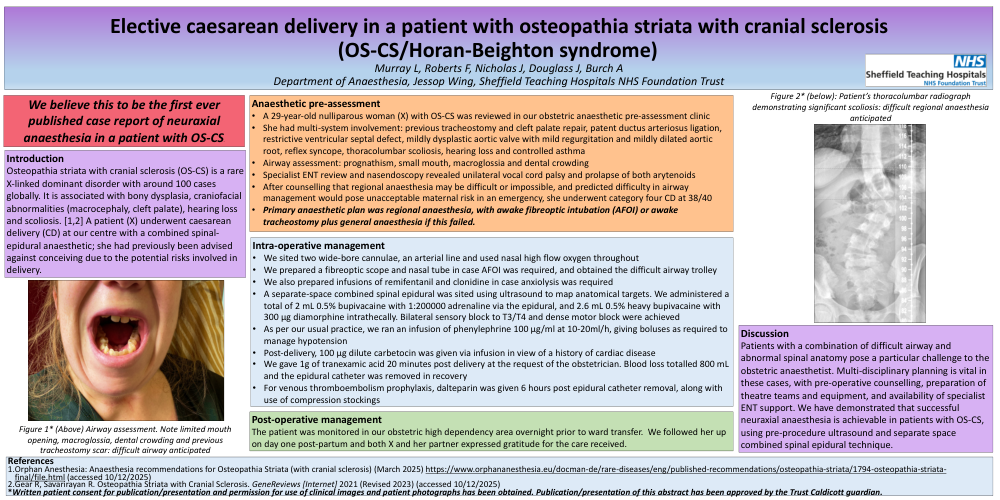
Osteopathia striata with cranial sclerosis (OS-CS) is a rare X-linked dominant disorder with around 100 cases globally. It is associated with bony dysplasia, craniofacial abnormalities (macrocephaly, cleft palate), hearing loss and scoliosis. [1,2] A patient (X) underwent caesarean delivery (CD) at our centre with a combined spinal-epidural anaesthetic; she had previously been advised against conceiving due to the potential risks involved in delivery.
Anaesthetic pre-assessment
Intra-operative management
Post-operative management
The patient was monitored in our obstetric high dependency area overnight prior to ward transfer. We followed her up on day one post-partum and both X and her partner expressed gratitude for the care received.
Discussion
Patients with a combination of difficult airway and abnormal spinal anatomy pose a particular challenge to the obstetric anaesthetist. Multi-disciplinary planning is vital in these cases, with pre-operative counselling, preparation of theatre teams and equipment, and availability of specialist ENT support. We have demonstrated that successful neuraxial anaesthesia is achievable in patients with OS-CS, using pre-procedure ultrasound and separate space combined spinal epidural technique.
References
*Written patient consent for publication/presentation and permission for use of clinical images and patient photographs has been obtained. Publication/presentation of this abstract has been approved by the Trust Caldicott guardian.