226 posters, 5 topics, 20 sessions, 599 authors, 292 institutions
ePostersLive by SciGen Technologies S.A. All rights reserved.
Obstetric Anaesthesia Annual Scientific Meeting 2026
14-15 May 2026 | Liverpool Convention Centre

7157205
Treat first, deliver second: management of aneurysmal subarachnoid haemorrhage in late pregnancy
Poster Presenter
Part of Topic
Case report
Treat first, deliver second: management of aneurysmal subarachnoid haemorrhage in late pregnancy
Yathukulan Maheswaran, Joseph Brandreth, Parvesh Verma, ArchchanaRadhakrishnan, Lynne Barrass, Angus Royal
Department of Anaesthetics | Royal London Hospital
Background
Subarachnoid haemorrhage (SAH) occurs in approximately 1 in 10,000 pregnancies and may be more common in the third trimester (1). Management in advanced gestation is challenging and requires complex multidisciplinary (MDT) decision-making, balancing maternal and fetal risks. The literature is limited, with most cases describing delivery prior to definitive SAH treatment (2).
Case Report
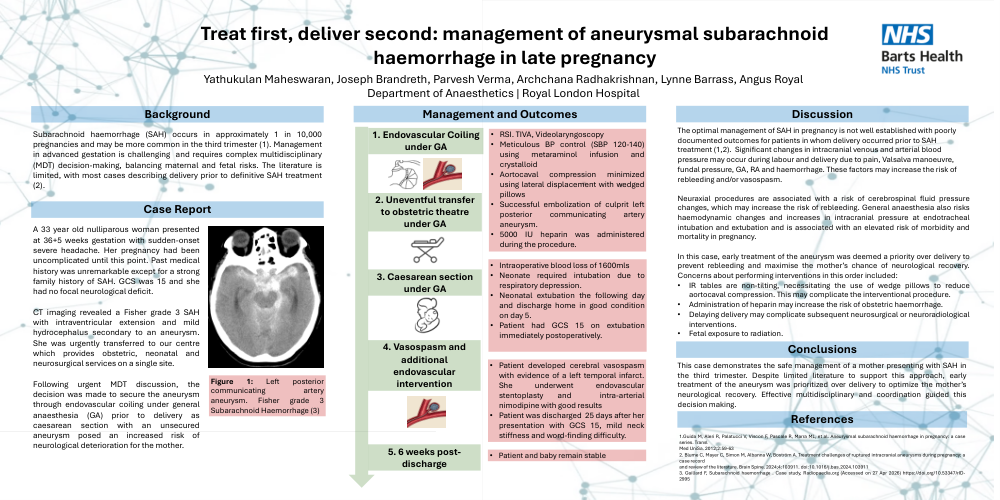
A 33 year old nulliparous woman presented at 36+5 weeks gestation with sudden-onset severe headache. Her pregnancy had been uncomplicated until this point. Past medical history was unremarkable except for a strong family history of SAH. GCS was 15 and she had no focal neurological deficit.
CT imaging revealed a Fisher grade 3 SAH with intraventricular extension and mild hydrocephalus secondary to an aneurysm. She was urgently transferred to our centre which provides obstetric, neonatal and neurosurgical services on a single site.
Following urgent MDT discussion, the decision was made to secure the aneurysm through endovascular coiling under general anaesthesia (GA) prior to delivery as caesarean section with an unsecured aneurysm posed an increased risk of neurological deterioration for the mother.
Management and Outcomes
Discussion
The optimal management of SAH in pregnancy is not well established with poorly documented outcomes for patients in whom delivery occurred prior to SAH treatment (1,2). Significant changes in intracranial venous and arterial blood pressure may occur during labour and delivery due to pain, Valsalva manoeuvre, fundal pressure, GA, RA and haemorrhage. These factors may increase the risk of rebleeding and/or vasospasm.
Neuraxial procedures are associated with a risk of cerebrospinal fluid pressure changes, which may increase the risk of rebleeding. General anaesthesia also risks haemodynamic changes and increases in intracranial pressure at endotracheal intubation and extubation and is associated with an elevated risk of morbidity and mortality in pregnancy.
In this case, early treatment of the aneurysm was deemed a priority over delivery to prevent rebleeding and maximise the mother’s chance of neurological recovery. Concerns about performing interventions in this order included: