191 posters, 5 topics, 20 sessions, 393 authors, 116 institutions
ePostersLive by SciGen Technologies S.A. All rights reserved.
Obstetric Anaesthesia Annual Scientific Meeting 2023
18 - 19 May, 2023 | EICC Edinburgh

5809996
Reducing the use of ethyl chloride spray in obstetrics with a cool new idea: a quality improvement project
Poster Presenter
Authors
Affiliations
Part of Topic
Quality Improvement
Reducing the use of Ethyl Chloride Spray in Obstetrics with a Cool New Idea: a Quality Improvement Project
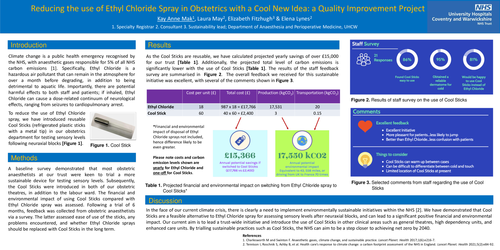
Climate change is a public health emergency recognised by the NHS, with anaesthetic gases responsible for 5% of all NHS carbon emissions [1]. Specifically, Ethyl Chloride is a hazardous air pollutant that can remain in the atmosphere for over a month before degrading, in addition to being detrimental to aquatic life. Importantly, there are potential harmful effects to both staff and patients; if inhaled, Ethyl Chloride can cause a dose-related continuum of neurological effects, ranging from seizures to cardiopulmonary arrest. To reduce the use of Ethyl Chloride spray, we have introduced reusable Cool Sticks (refrigerated plastic sticks with a metal tip) in our obstetrics department for testing sensory levels following neuraxial blocks [Figure 1].
A baseline survey demonstrated that most obstetric anaesthetists at our trust were keen to trial a more sustainable device for testing sensory levels. Subsequently, the Cool Sticks were introduced in both of our obstetric theatres, in addition to the labour ward. The financial and environmental impact of using Cool Sticks compared with Ethyl Chloride spray was assessed. Following a trial of 6 months, feedback was collected from obstetric anaesthetists via a survey. The latter assessed ease of use of the sticks, any problems encountered, and whether Ethyl Chloride sprays should be replaced with Cool Sticks in the long term.
As the Cool Sticks are reusable, we have calculated projected yearly savings of over £15,000 for our trust [Table 1]. Additionally, the projected total level of carbon emissions is significantly lower with the use of Cool Sticks [Table 1]. The results of the staff feedback survey are summarised in Figure 2. The overall feedback we received for this sustainable initiative was excellent, with several of the comments shown in Figure 3.
In the face of our current climate crisis, there is clearly a need to implement environmentally sustainable initiatives within the NHS [2]. We have demonstrated that Cool Sticks are a feasible alternative to Ethyl Chloride spray for assessing sensory levels after neuraxial blocks, and can lead to a significant positive financial and environmental impact. Our current aim is to lead a trust-wide initiative and introduce the use of Cool Sticks in other clinical areas such as general theatres, high dependency units, and enhanced care units. By trialling sustainable practices such as Cool Sticks, the NHS can aim to be a step closer to achieving net zero by 2040.