191 posters, 5 topics, 20 sessions, 393 authors, 116 institutions
ePostersLive by SciGen Technologies S.A. All rights reserved.
Obstetric Anaesthesia Annual Scientific Meeting 2023
18 - 19 May, 2023 | EICC Edinburgh

5799071
Development of a pathway for the follow up of neurological symptoms following obstetric anaesthesia - A multi-speciality task.
Poster Presenter
Authors
Affiliations
null,
Part of Topic
Quality Improvement
Introduction
The Ockenden report1 highlighted the need for effective and timely inpatient and outpatient follow up of obstetric anaesthetic patients.
Post neuraxial anaesthesia neurological symptoms were a highlighted area for specific follow up.
We identified that our trust had no formalised pathway for the investigation and management of this complication.
Method
We developed a generic follow up pathway that any post natal patient could be entered in to.
We then went on to further develop this pathway for the specific concern of post neuraxial neurological symptoms. During development we identified that there was no formal pathway for requesting out of hours MRI imaging in our trust. Through liaison with the radiology department, lead consultant for neurology and our local tertiary neurosurgical centre, a pathway was agreed and incorporated into the new guideline. The guideline was ratified at the relevant group.
Results
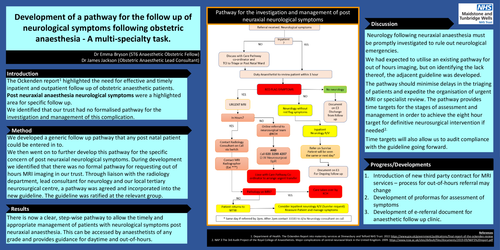
There is now a clear, step-wise pathway to allow the timely and appropriate management of patients with neurological symptoms post neuraxial anaesthesia. This can be accessed by anaesthetists of any grade and provides guidance for daytime and out-of-hours.
Discussion
Neurology following neuraxial anaesthesia must be promptly investigated to rule out neurological emergencies.
We had expected to utilise an existing pathway for out of hours imaging, but on identifying the lack thereof, the adjacent guideline was developed.
The pathway should minimise delays in the triaging of patients and expedite the organisation of urgent MRI or specialist review. The pathway provides time targets for the stages of assessment and management in order to achieve the eight hour target for definitive neurosurgical intervention if needed2.
Time targets will also allow us to audit compliance with the guideline going forward.
Progress/Developments