708 posters, 8 topics, 16 sessions, 1,190 authors, 600 institutions
ePostersLive by SciGen Technologies S.A. All rights reserved.
ISQua's 39th International Conference 2023
August 27 - 30, 2023 | Seoul, Republic of Korea

P445
REDUCING THE FEAR IN HOSPITALIZED PRESCHOOL-AGED CHILDREN BY USING “OPENABLE INNOVATIVE INTRAVENOUS INJECTION SPLINTS”
Part of Topic
Integrated Care
Reducing the Fear in Hospitalized Preschool-Aged Children by Using “Openable Innovative Intravenous Injection Splints”
INTRODUCTION
Facing unfamiliar medical environments and invasive intravenous treatment, preschool-aged children with respiratory tract infections fear and resist said treatment, resulting in them pulling related medical tubes and intravenous catheter coming off. A relevant survey on preschool-aged children showed that 97.2% of them feared invasive intravenous injections, and that the completion rate of invasive intravenous injection-related health education (offered by nurses) was merely 58%. A subsequent analysis showed that the main reasons contributing to such a low completion rate were children fearing the intravenous injection process; medical tubes being exposed after insertions; children pulling medical tubes out of fear; intravenous injection splints being the same rather than being customized; nurses failing to fully provide intravenous injection–related health education prior to performing injections; and nurses failing to use therapeutic games to reduce children’s anxiety and fear.
AIM
Reducing the Fear in Hospitalized Preschool-Aged Children by Using “Openable Innovative Intravenous Injection Splints”
METHOD
To reduce preschool-aged children’s fear of intravenous injections and ensure that nurses follow the standard procedure for providing invasive intravenous injection–related health education prior to performing injections:
RESULTS
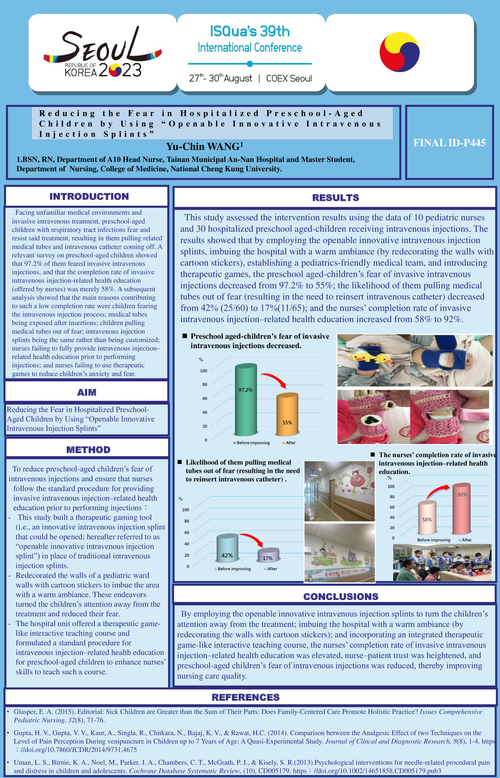
This study assessed the intervention results using the data of 10 pediatric nurses and 30 hospitalized preschool aged-children receiving intravenous injections. The results showed that by employing the openable innovative intravenous injection splints, imbuing the hospital with a warm ambiance (by redecorating the walls with cartoon stickers), establishing a pediatrics-friendly medical team, and introducing therapeutic games, the preschool aged-children’s fear of invasive intravenous injections decreased from 97.2% to 55%; the likelihood of them pulling medical tubes out of fear (resulting in the need to reinsert intravenous catheter) decreased from 42% (25/60) to 17%(11/65); and the nurses’ completion rate of invasive intravenous injection–related health education increased from 58% to 92%.
CONCLUSIONS
By employing the openable innovative intravenous injection splints to turn the children’s attention away from the treatment; imbuing the hospital with a warm ambiance (by redecorating the walls with cartoon stickers); and incorporating an integrated therapeutic game-like interactive teaching course, the nurses’ completion rate of invasive intravenous injection–related health education was elevated, nurse–patient trust was heightened, and preschool-aged children’s fear of intravenous injections was reduced, thereby improving nursing care quality.
REFERENCES