708 posters, 8 topics, 16 sessions, 1,190 authors, 600 institutions
ePostersLive by SciGen Technologies S.A. All rights reserved.
ISQua's 39th International Conference 2023
August 27 - 30, 2023 | Seoul, Republic of Korea

P390
TRANSITION FROM PATERNALISM TO SHARED DECISION MAKING- AN EXPERIENCE OF A MEDICAL CENTER IN NORTHERN TAIWAN
Poster Presenter
Part of Topic
Integrated Care
Introduction: Starting in 2016, a nationwide shared decision making (SDM) program was launched in Taiwan in response to rising awareness of patients’ rights and engagement. In order to streamline the SDM process, a task force, consisting of clinicians, quality managers, information technology technicians, and patient representatives, was formed to accomplish the mission.
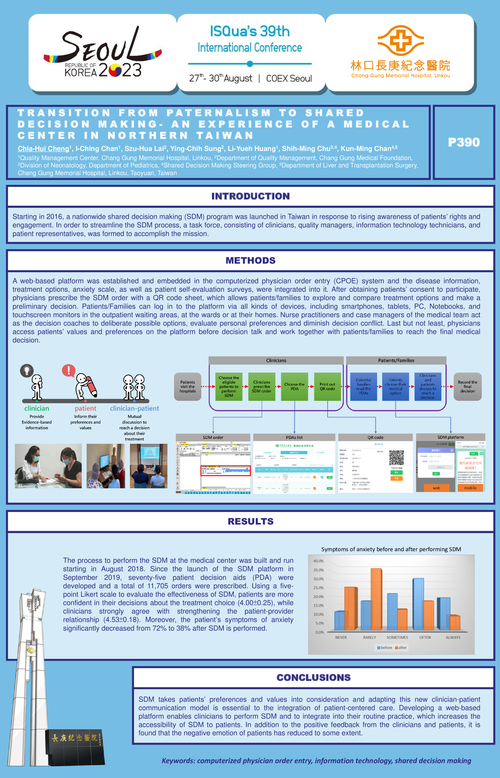
Methods: A web-based platform is established and embedded in the computerized physician order entry (CPOE) system and the disease information, treatment options, anxiety scale, as well as patient self-evaluation surveys, are integrated into it. After obtaining patients’ consent to participate, physicians prescribe the SDM order with a QR code sheet, which allows patients/families to explore and compare treatment options and make a preliminary decision. Patients/Families can log in to the platform via all kinds of devices, including smartphones, tablets, PC, Notebooks, and touchscreen monitors in outpatient waiting areas or at their homes. Nurse practitioners and case managers of the medical team act as decision coaches to deliberate possible options, evaluate personal preferences and diminish decision conflict. Last but not least, physicians access patients’ values and preferences on the platform before decision talk and work together with patients/families to reach the final medical decision.
Results: The process to perform the SDM at the medical center is built and run starting in August 2018. Since the launch of the SDM platform in September 2019, seventy-five patient decision aids (PDA) were developed and a total of 11,705 orders were prescribed. Using a five-point Likert scale to evaluate the effectiveness of SDM, patients are more confident in their decisions about the treatment choice (4.00±0.25), while clinicians strongly agree with strengthening the patient-provider relationship (4.53±0.18). Moreover, the patient’s symptoms of anxiety significantly decreased from 72% to 38% after SDM is performed.
Conclusion: SDM takes patients’ preferences and values into consideration and adapting it is essential to the integration of patient-centered care. Developing a web-based platform enables clinicians to perform SDM as their routine practice and increases the accessibility of SDM to patients. In addition to the positive feedback from the clinicians and patients, it is found that the negative emotion of patients has reduced to some extent.