477 posters, 14 topics, 2,065 authors, 1,055 institutions
ePostersLive by SciGen Technologies S.A. All rights reserved.
The Joint EBJIS-MSIS 2026 Conference
17 - 19 September, 2026 | Porto, Portugal

PP66
SSRI/SNRI Use Within 6 Months Prior to Primary THA Increases Risk of Postoperative Infection and Complications: A Global Database Analysis
Part of Topic
Prosthetic Joint Infections
Introduction:
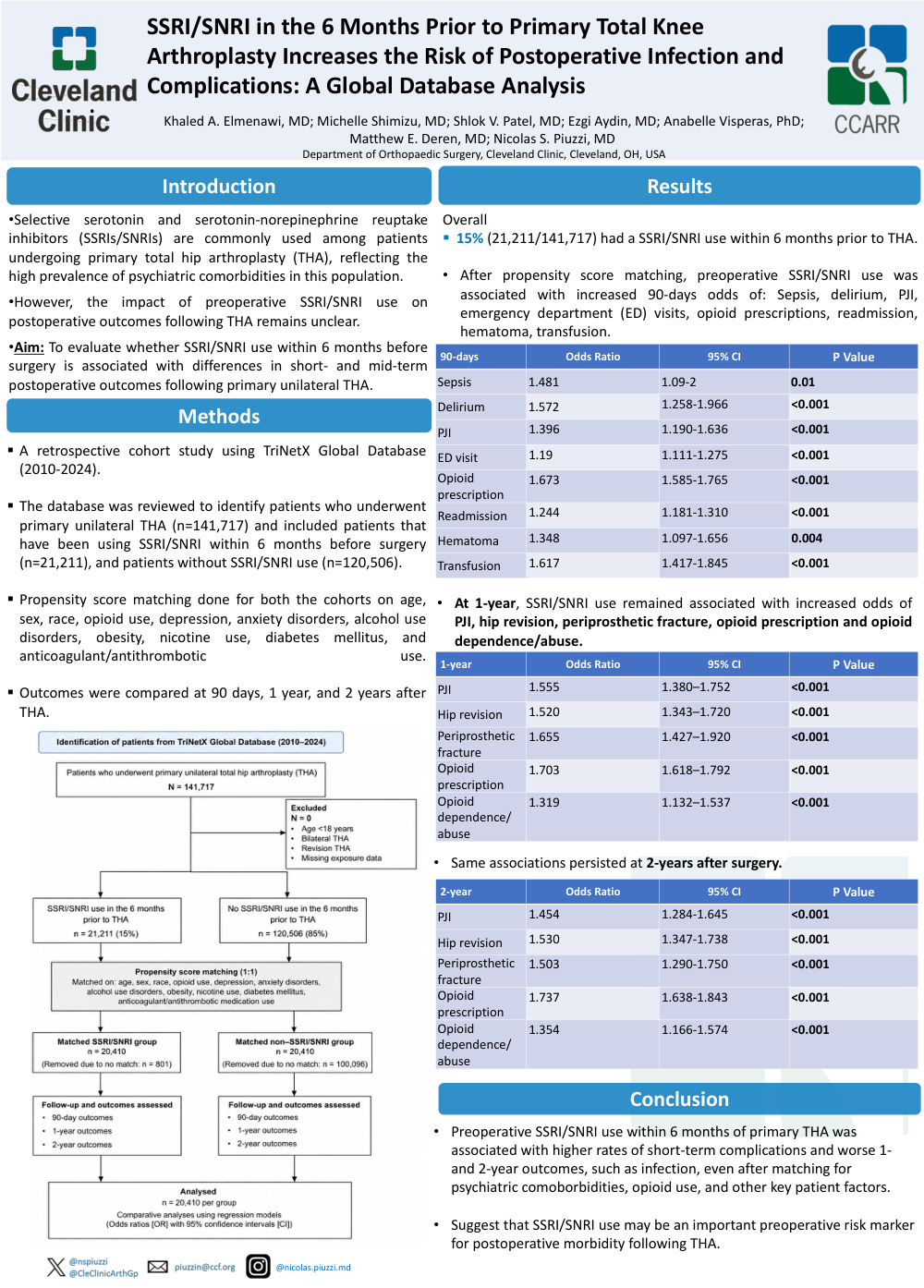
Selective serotonin and serotonin-norepinephrine reuptake inhibitors (SSRIs/SNRIs) are commonly used among patients undergoing primary total hip arthroplasty (THA), reflecting the high prevalence of psychiatric comorbidities in this population.
However, the impact of preoperative SSRI/SNRI use on postoperative outcomes following THA remains unclear.
Aim: To evaluate whether SSRI/SNRI use within 6 months before surgery is associated with differences in short- and mid-term postoperative outcomes following primary unilateral THA.
Methods:
After propensity score matching, preoperative SSRI/SNRI use was associated with increased 90-days odds of: Sepsis, delirium, PJI, emergency department (ED) visits, opioid prescriptions, readmission, hematoma, transfusion.
At 1-year, SSRI/SNRI use remained associated with increased odds of PJI, hip revision, periprosthetic fracture, opioid prescription and opioid dependence/abuse.
Same associations persisted at 2-years after surgery.
Conclusion:
Preoperative SSRI/SNRI use within 6 months of primary THA was associated with higher rates of short-term complications and worse 1-and 2-year outcomes, such as infection, even after matching for psychiatric comoborbidities, opioid use, and other key patient factors.
Suggest that SSRI/SNRI use may be an important preoperative risk marker for postoperative morbidity following THA.