477 posters, 14 topics, 2,065 authors, 1,055 institutions
ePostersLive by SciGen Technologies S.A. All rights reserved.
The Joint EBJIS-MSIS 2026 Conference
17 - 19 September, 2026 | Porto, Portugal

EP373
Proposed Framework for Complex MDT Guidelines: Establishing Best Practices in Infectious Diseases and Orthopaedics at an Irish hospital.
Part of Topic
Prosthetic Joint Infections
Title
Proposed Framework for Complex MDT Guidelines: Establishing Best Practices in Infectious Diseases and Orthopaedics at an Irish hospital.
Abstract
Introduction and Aim: Bone and joint infections (BJIs) are associated with significant morbidity, prolonged hospital stays, revision surgeries, and high costs1,2. Infectious Disease specialists and Orthopaedic surgeons often co-operate in the complex management of bone and joint infections3,4. This research will identify gaps in current complex multidisciplinary team meetings’ (MDT) procedures and offer an evidence-based approach to address them. This will be done through a narrative review of current and past MDT practices and will assist in creating an adaptable set of guidelines for tertiary-care centres. This study can serve as a model for integrating specialities through complex care pathways.
Methods: A narrative review was performed, focusing on published MDT experiences in BJIs which included observational studies, diagnostic algorithms and outcome analyses. Based on the findings, along with our own institutional experience at St James’s Hospital, a proposed MDT framework was developed.
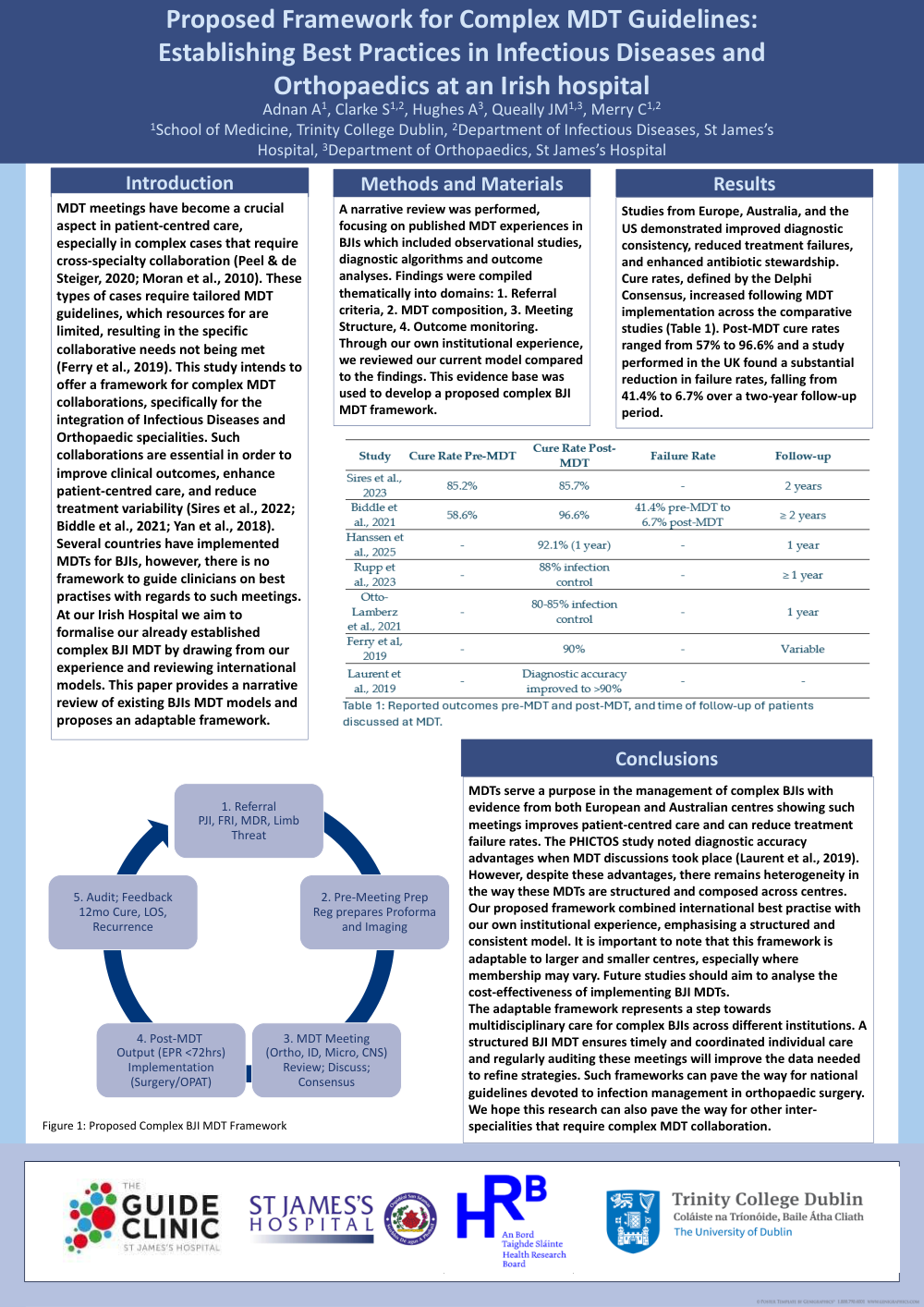
Results: Studies from Europe, Australia, and the US demonstrated improved diagnostic consistency, reduced treatment failures, and enhanced antibiotic stewardship. Cure rates, defined by the Delphi Consensus, increased following MDT implementation across the comparative studies (Table 1). Post-MDT cure rates ranged from 57% to 96.6% and a study performed in the UK found a substantial reduction in failure rates, falling from 41.4% to 6.7% over a two-year follow-up period5. We propose a model which includes referral criteria, team composition, workflow, outcome monitoring standards, frequency, and a tertiary-care based structure of such complex MDTs, tailored to an Irish hospital.
Conclusion: A standardised complex MDT framework offers a pathway towards more consistent decision making and efficient use of resources. We plan to regularly audit this model to adapt to emerging evidence and drive continuous improvements in patient-centred care.