99 posters, 2 videos, 5 audios, 13 topics, 7 sessions, 418 authors, 180 institutions
ePostersLive by SciGen Technologies S.A. All rights reserved.
The 21st Meeting of the Diabetic Foot Study Group 2026
24-26 September, 2026 | Florence, Italy

EP90
NOT EVERY PERIPHERAL NEUROPATHY IN PEOPLE WITH DIABETES IS DIABETIC NEUROPATHY: A CASE REPORT
Poster Presenter
Authors
Affiliations
Part of Topic
Diagnostics
NOT EVERY PERIPHERAL NEUROPATHY IN PEOPLE WITH DIABETES IS DIABETIC NEUROPATHY: A CASE REPORT
Vasiliki Mamakou1, Theofania Karaolani1, Stavroula- Panagiota Lontou2, Christina Aggelaki2, Georgia Markou,2, Pinelopi Koutsoudaki1, Effrosyni Matsouka3, Anastasia Thanopoulou4, Nikolaos Tentolouris2
1 Department of Internal Medicine, Dromokaiteio Psychiatric Hospital, Athens, Greece
2 National and Kapodistrian University of Athens, Laiko General Hospital, 1st Department of Internal Medicine, Athens, Greece
3 Department of Microbiology, Children’s Hospital Agia Sofia, Athens, Greece
4 Second Department of Internal Medicine, National University of Athens, Hippokration General Hospital, Athens, Greece
Introduction: Diabetic neuropathy presents as sensory, motor and autonomic neuropathy. Although diabetes is the most common form of chronic sensorimotor neuropathy, clinicians should always consider and exclude other etiological factors, such as alcohol, nutritional deficiencies, toxins, malignancy, genetic conditions or hypothyroidism.
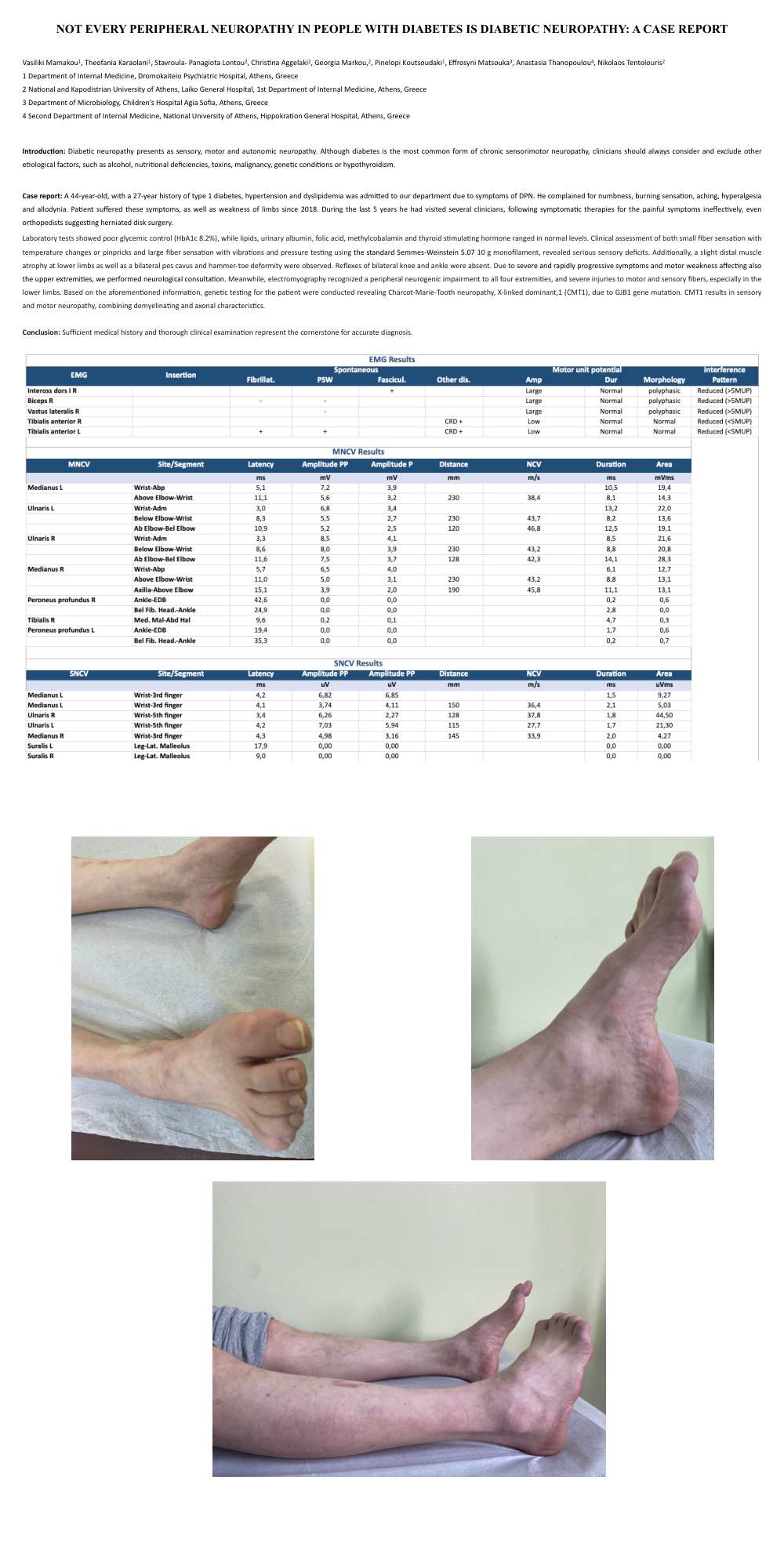
Case report: A 44-year-old, with a 27-year history of type 1 diabetes, hypertension and dyslipidemia was admitted to our department due to symptoms of DPN. He complained for numbness, burning sensation, aching, hyperalgesia and allodynia. Patient suffered these symptoms, as well as weakness of limbs since 2018. During the last 5 years he had visited several clinicians, following symptomatic therapies for the painful symptoms ineffectively, even orthopedists suggesting herniated disk surgery. Laboratory tests showed poor glycemic control (HbA1c 8.2%), while lipids, urinary albumin, folic acid, methylcobalamin and thyroid stimulating hormone ranged in normal levels. Clinical assessment of both small fiber sensation with temperature changes or pinpricks and large fiber sensation with vibrations and pressure testing using the standard Semmes-Weinstein 5.07 10 g monofilament, revealed serious sensory deficits. Additionally, a slight distal muscle atrophy at lower limbs as well as a bilateral pes cavus and hammer‐toe deformity were observed. Reflexes of bilateral knee and ankle were absent. Due to severe and rapidly progressive symptoms and motor weakness affecting also the upper extremities, we performed neurological consultation. Meanwhile, electromyography recognized a peripheral neurogenic impairment to all four extremities, and severe injuries to motor and sensory fibers, especially in the lower limbs. Based on the aforementioned information, genetic testing for the patient were conducted revealing Charcot-Marie-Tooth neuropathy, X-linked dominant,1 (CMT1), due to GJB1 gene mutation. CMT1 results in sensory and motor neuropathy, combining demyelinating and axonal characteristics.
Conclusion: Sufficient medical history and thorough clinical examination represent the cornerstone for accurate diagnosis.