99 posters, 2 videos, 5 audios, 13 topics, 7 sessions, 418 authors, 180 institutions
ePostersLive by SciGen Technologies S.A. All rights reserved.
The 21st Meeting of the Diabetic Foot Study Group 2026
24-26 September, 2026 | Florence, Italy

EP81
Presence of Reduced Functional Independence in Patients with Prolonged Immobilisation warrants the Development and Implementation of a Tailored Exercise Plan
Poster Presenter
Part of Topic
Orthopaedic surgery
Presence of Reduced Functional Independence in Patients with Prolonged Immobilisation warrants the Development and Implementation of a Tailored Exercise Plan
Background/Aims:
Patients who undergo diabetic foot (DF) intervention often endure a period of immobilisation and reduced weight bearing. In the DF cohort, this has an impact on muscle power, weight management and functional independence.
The aim of this pilot study was to establish whether this impact could be offset with the introduction of a tailored exercise programme alongside optimal medical treatment (OMT).
Methods: - Participant:
Measurements:
Manual muscle testing (MMT)
Modified Barthel Index
Weight (kg)
HbA1c
All at 0, 3 and 5 months
Intervention:
Results:
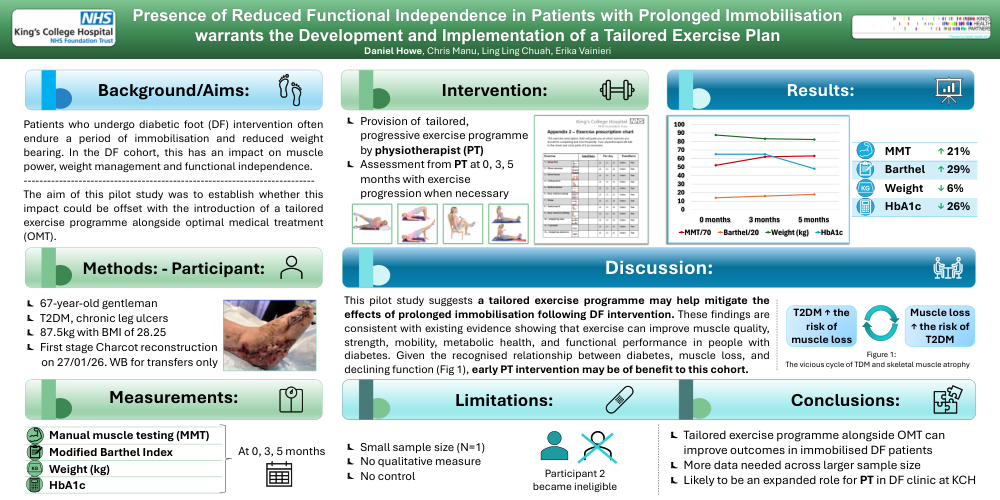
MMT increased by 21%
Barthel Increased by 29%
Weight decreased by 6%
HbA1c decreased by 26%
Discussion:
This pilot study suggests a tailored exercise programme may help mitigate the effects of prolonged immobilisation following DF intervention. These findings are consistent with existing evidence showing that exercise can improve muscle quality, strength, mobility, metabolic health, and functional performance in people with diabetes. Given the recognised relationship between diabetes, muscle loss, and declining function (Fig 1), early PT intervention may be of benefit to this cohort.
Limitations:
Participant 2 became ineligible
Conclusions: