99 posters, 2 videos, 5 audios, 13 topics, 7 sessions, 418 authors, 180 institutions
ePostersLive by SciGen Technologies S.A. All rights reserved.
The 21st Meeting of the Diabetic Foot Study Group 2026
24-26 September, 2026 | Florence, Italy

EP34
To Walk or Not to Walk Again after Major Limb Amputation: A Review of the Successful Progression to a Functional Prosthetic Limb Use
Part of Topic
Comorbidities
Introduction
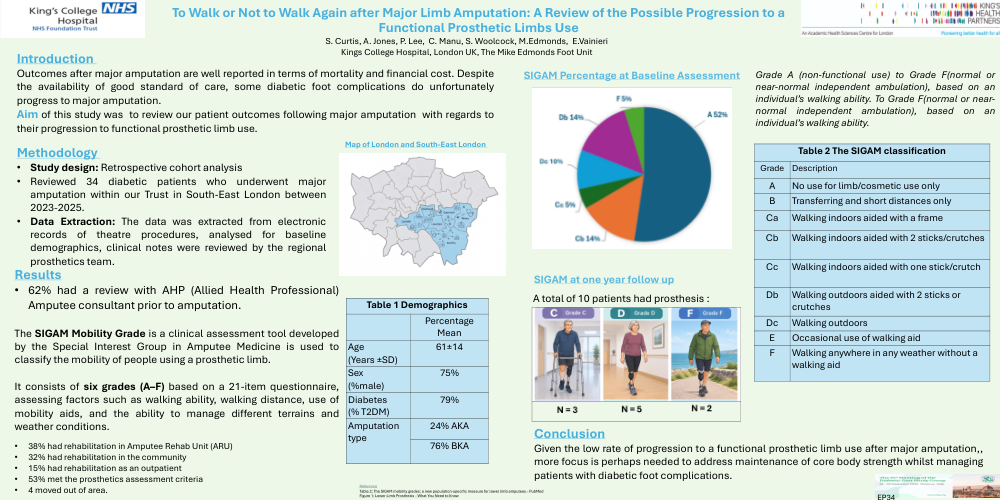
Outcomes after major amputation are well reported in terms of mortality and financial cost. Despite the availability of good standard of care, some diabetic foot complications do unfortunately progress to major amputation. The aim of this study was to review patient outcomes following major amputation and to evaluate their possible progression to successful prosthetic limb use.
The SIGAM classification is used by prosthetic team to assess the anticipated prosthetic use, ranging from Grade A (non-functional use) to Grade F (normal or near-normal independent ambulation), based on an individual’s walking ability. Maintaining a good core body strength is therefore important, as it supports balance, posture and walking ability, which may improve functional prosthetic use following major amputation.
Methodology
• Study design: Retrospective cohort analysis • Demographic: Reviewed 34 diabetic patients who underwent major amputation within South East London between 2023-2025. • Data Extraction: The data was extracted from electronic records of theatre procedures, analysed for baseline demographics, clinical notes were reviewed from Amputee Rehab Unit (ARU), including the use of SIGM grading classification for anticipated prosthetic use.
Conclusion The progression of diabetic foot patient into prosthetic limb use is low. It is important to highlight the need to maintain good core body strength whilst managing patients with chronic diabetic foot complications to be able to improve their chances of prosthetic use should they end up with major amputation.
Results
• 62% has ARU team review prior to amputation • 38% had rehabilitation in ARU • 32% had rehabilitation in the community • 15% had rehabilitation as an outpatient • 53% met the prosthetics assessment criteria • 4 moved out of area. • Leaving only 10 patients using prosthetic limbs