372 posters, 1 audios, 13 topics, 29 sessions, 1,035 authors, 449 institutions
ePostersLive by SciGen Technologies S.A. All rights reserved.
51st Annual Regional Anesthesiology and Acute Pain Medicine Meeting
April 16 - 18, 2026 | Phoenix, Arizona

2363341
Elective Total Knee Arthroplasty in Severe Thromboembolic Pulmonary Hypertension: A Case of Multidisciplinary Risk Assessment
Poster Presenter
Part of Topic
Late Breaking Medically Challenging Cases
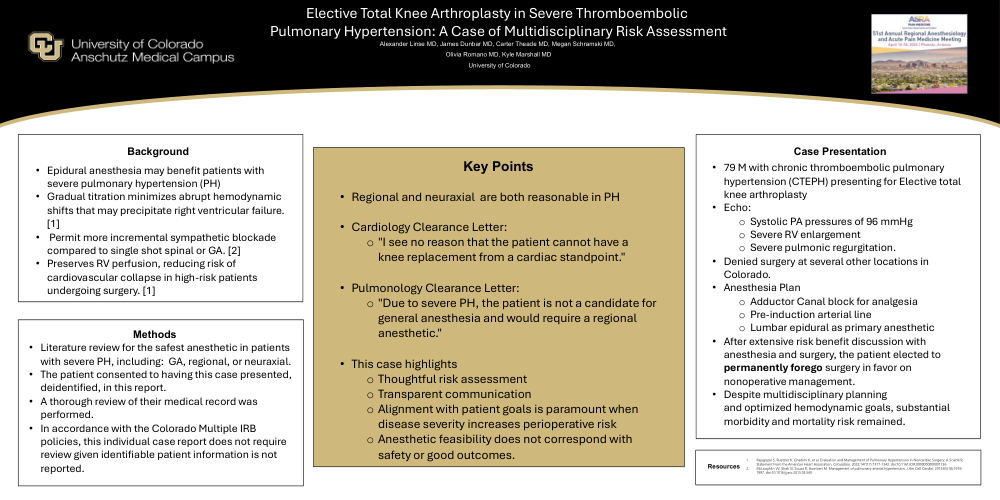
Elective Total Knee Arthroplasty in Severe Thromboembolic Pulmonary Hypertension: A Case of Multidisciplinary Risk Assessment Alexander Linse MD, James Dunbar MD, Carter Theade MD, Megan Schramski MD, Olivia Romano MD, Kyle Marshall MD University of Colorado • 79 M with chronic thromboembolic pulmonary hypertension (CTEPH) presenting for Elective total knee arthroplasty • Echo: o Systolic PA pressures of 96 mmHg o Severe RV enlargement o Severe pulmonic regurgitation. • Denied surgery at several other locations in Colorado. • Anesthesia Plan o Adductor Canal block for analgesia o Pre-induction arterial line o Lumbar epidural as primary anesthetic • After extensive risk benefit discussion with anesthesia and surgery, the patient elected to permanently forego surgery in favor on nonoperative management. • Despite multidisciplinary planning and optimized hemodynamic goals, substantial morbidity and mortality risk remained. • Epidural anesthesia may benefit patients with severe pulmonary hypertension (PH) • Gradual titration minimizes abrupt hemodynamic shifts that may precipitate right ventricular failure. [1] • Permit more incremental sympathetic blockade compared to single shot spinal or GA. [2] • Preserves RV perfusion, reducing risk of cardiovascular collapse in high-risk patients undergoing surgery. [1] • Literature review for the safest anesthetic in patients with severe PH, including: GA, regional, or neuraxial. • The patient consented to having this case presented, deidentified, in this report. • A thorough review of their medical record was performed. • In accordance with the Colorado Multiple IRB policies, this individual case report does not require review given identifiable patient information is not reported. Key Points • Regional and neuraxial are both reasonable in PH • Cardiology Clearance Letter: o "I see no reason that the patient cannot have a knee replacement from a cardiac standpoint." • Pulmonology Clearance Letter: o "Due to severe PH, the patient is not a candidate for general anesthesia and would require a regional anesthetic." • This case highlights o Thoughtful risk assessment o Transparent communication o Alignment with patient goals is paramount when disease severity increases perioperative risk o Anesthetic feasibility does not correspond with safety or good outcomes.