372 posters, 1 audios, 13 topics, 29 sessions, 1,035 authors, 449 institutions
ePostersLive by SciGen Technologies S.A. All rights reserved.
51st Annual Regional Anesthesiology and Acute Pain Medicine Meeting
April 16 - 18, 2026 | Phoenix, Arizona

2315631
Importance of Therapeutic Alliance, Education, & Ultrasound for Patient Experience of Peripheral Nerve Blocks: A qualitative study
Poster Presenter
Part of Topic
Scientific Abstracts > Regional Anesthesia
Both pharmacologic and behavioral means are frequently used to
provide anxiolysis and analgesia during regional anesthesia
Pain catastrophizing = negative cognitive-emotional response to anticipated
or actual pain
→ associated with: anxiety + procedural pain
→ can be scored: Pain Catastrophizing Scale (PCS)
Prior quantitative studies demonstrated patients with high PCS scores (≥10)
experienced a benefit of sedation with significantly less maximal procedural
pain with sedation compared to education/reassurance, than patients with
low PCS scores
Objective/Aims:
• to identify themes regarding patient experience during single injection
nerve block placement with titrated sedation or enhanced
education/reassurance
• to explore the influence of pain catastrophizing on patient experience
Patients completed Pain Catastrophizing Scale questionnaire in pre-op
(PCS; range 0-52; low <10, high ≥10)
Patients randomized to receive moderate sedation or intraprocedural
education and reassurance.
Post-op semi-structured interviews about experience with single injection
nerve block (SINB) conducted;sample questions:
• If you were to describe your experience with the nerve block to
someone else, what would you say?
• What was your overall experience with having a nerve block? What do
you remember?
• Did you have a preference for the pharmacologic sedation or
nonpharmacologic reassurance/education group? If yes, which one?
Why?
Interviews audio-recorded + transcribed, dual coded inductively at the
semantic level (Dedoose Software) and iteratively categorized to identify
major themes
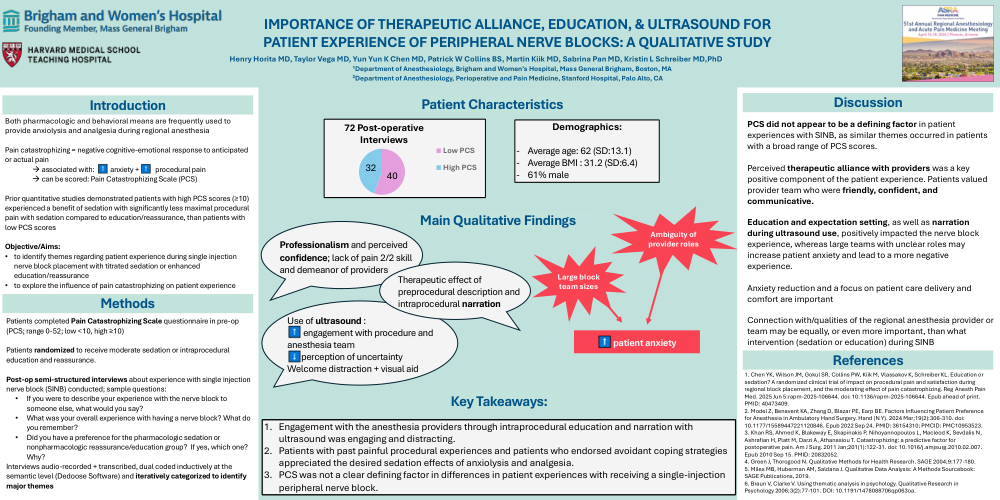
Demographics:
- Average age: 62 (SD:13.1)
- Average BMI : 31.2 (SD:6.4)
- 61% male
Professionalism and perceived
confidence; lack of pain 2/2 skill
and demeanor of providers
Therapeutic effect of
preprocedural description and
intraprocedural narration
Use of ultrasound :
engagement with procedure and
anesthesia team
perception of uncertainty
Welcome distraction + visual aid
Key Takeaways
1. Engagement with the anesthesia providers through intraprocedural education and narration with
ultrasound was engaging and distracting.
2. Patients with past painful procedural experiences and patients who endorsed avoidant coping strategies
appreciated the desired sedation effects of anxiolysis and analgesia.
3. PCS was not a clear defining factor in differences in patient experiences with receiving a single-injection
peripheral nerve block.
Large Block team sizes
Ambiguity of provider roles
patient anxiety
PCS did not appear to be a defining factor in patient
experiences with SINB, as similar themes occurred in patients
with a broad range of PCS scores.
Perceived therapeutic alliance with providers was a key
positive component of the patient experience. Patients valued
provider team who were friendly, confident, and
communicative.
Education and expectation setting, as well as narration
during ultrasound use, positively impacted the nerve block
experience, whereas large teams with unclear roles may
increase patient anxiety and lead to a more negative
experience.
Anxiety reduction and a focus on patient care delivery and
comfort are important
Connection with/qualities of the regional anesthesia provider or
team may be equally, or even more important, than what
intervention (sedation or education) during SINB