383 posters, 2 videos, 1 audios, 8 topics, 28 sessions, 328 authors, 225 institutions
ePostersLive by SciGen Technologies S.A. All rights reserved.
50th Annual Regional Anesthesiology and Acute Pain Medicine Meeting
May 1 - 3, 2025 | Orlando, Florida

6668
CALL ME… MAYBE? – TEXT-BASED NERVE BLOCK FOLLOW-UP
Poster Presenter
Authors
Affiliations
Part of Topic
Safety/QA/QI Projects
Introduction
Following ambulatory surgery, anesthesiology providers are responsible for contacting patients one day postoperatively to assess the resolution of nerve block effects and evaluate for potential complications. This follow-up process can be time-consuming, and nearly 40% of patients may not be reached on the first phone call attempt. Phone calls for follow-up are inefficient and frequently result in missed connections, leading to suboptimal care and wasted provider time. Additionally, patients may require language interpretation during follow-up, further complicating the process and contributing to delays and potential inaccuracies in communication. This highlights the need for a more effective and efficient method of patient follow-up after nerve block procedures, such as text messaging, which may offer improved accessibility and response rates.
Materials/Methods
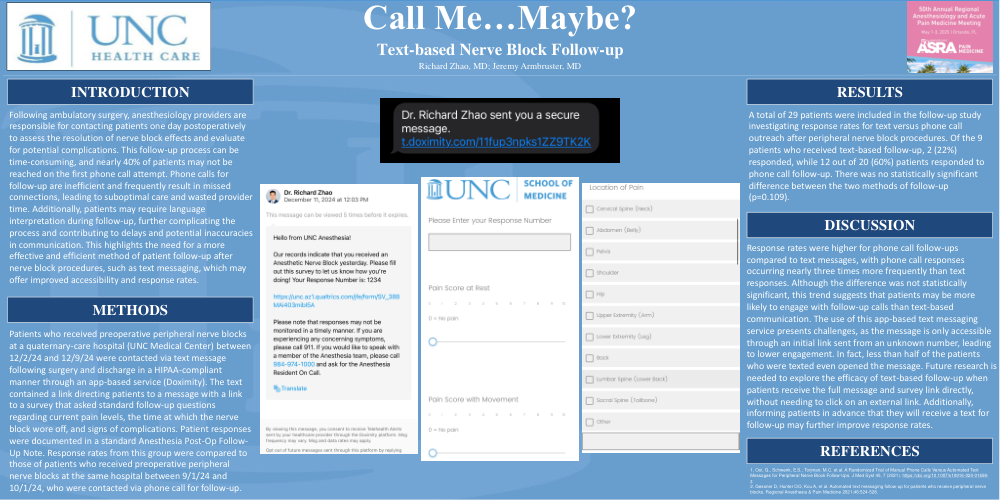
Patients who received preoperative peripheral nerve blocks at a quaternary-care hospital (UNC Medical Center) between 12/2/24 and 12/9/24 were contacted via text message following surgery and discharge in a HIPAA-compliant manner through an app-based service (Doximity). The text contained a link directing patients to a message with a link to a survey that asked standard follow-up questions regarding current pain levels, the time at which the nerve block wore off, and signs of complications. Patient responses were documented in a standard Anesthesia Post-Op Follow-Up Note. Response rates from this group were compared to those of patients who received preoperative peripheral nerve blocks at the same hospital between 9/1/24 and 10/1/24, who were contacted via phone call for follow-up.
Results
A total of 29 patients were included in the follow-up study investigating response rates for text versus phone call outreach after peripheral nerve block procedures. Of the 9 patients who received text-based follow-up, 2 (22%) responded, while 12 out of 20 (60%) patients responded to phone call follow-up. There was no statistically significant difference between the two methods of follow-up (p=0.109).
Discussion
Response rates were higher for phone call follow-ups compared to text messages, with phone call responses occurring nearly three times more frequently than text responses. Although the difference was not statistically significant, this trend suggests that patients may be more likely to engage with follow-up calls than text-based communication. The use of this app-based text messaging service presents challenges, as the message is only accessible through an initial link sent from an unknown number, leading to lower engagement. In fact, less than half of the patients who were texted even opened the message. Future research is needed to explore the efficacy of text-based follow-up when patients receive the full message and survey link directly, without needing to click on an external link. Additionally, informing patients in advance that they will receive a text for follow-up may further improve response rates.
References
1. Ooi, G., Schwenk, E.S., Torjman, M.C. et al. A Randomized Trial of Manual Phone Calls Versus Automated Text Messages for Peripheral Nerve Block Follow-Ups. J Med Syst 45, 7 (2021). https://doi.org/10.1007/s10916-020-01699-z
2. Gessner D, Hunter OO, Kou A, et al. Automated text messaging follow-up for patients who receive peripheral nerve blocks. Regional Anesthesia & Pain Medicine 2021;46:524-528.