383 posters, 2 videos, 1 audios, 8 topics, 28 sessions, 328 authors, 225 institutions
ePostersLive by SciGen Technologies S.A. All rights reserved.
50th Annual Regional Anesthesiology and Acute Pain Medicine Meeting
May 1 - 3, 2025 | Orlando, Florida

6721
POST-MARKET CLINICAL INVESTIGATION OF SAFETY AND USEABILITY OF AN AUTOMATED INJECTING DEVICE FOR REGIONAL ANESTHESIA
Poster Presenter
Authors
Affiliations
Part of Topic
Safety/QA/QI Projects
Can an automated pressure-limiting device perform safely and effectively in regional Anesthesia?
POST-MARKET CLINICAL INVESTIGATION OF SAFETY AND USEABILITY OF AN AUTOMATED INJECTING DEVICE FOR REGIONAL ANESTHESIA
Robin Heij1, Sabry Ayad 2, Benjamin Fox
Queen Elizabeth Hospital1, Kings Lynn, UK & Cleveland Clinic2, OH, USA
Methods:
Ethics/IRB approval was granted from Health Research Authority (UK).
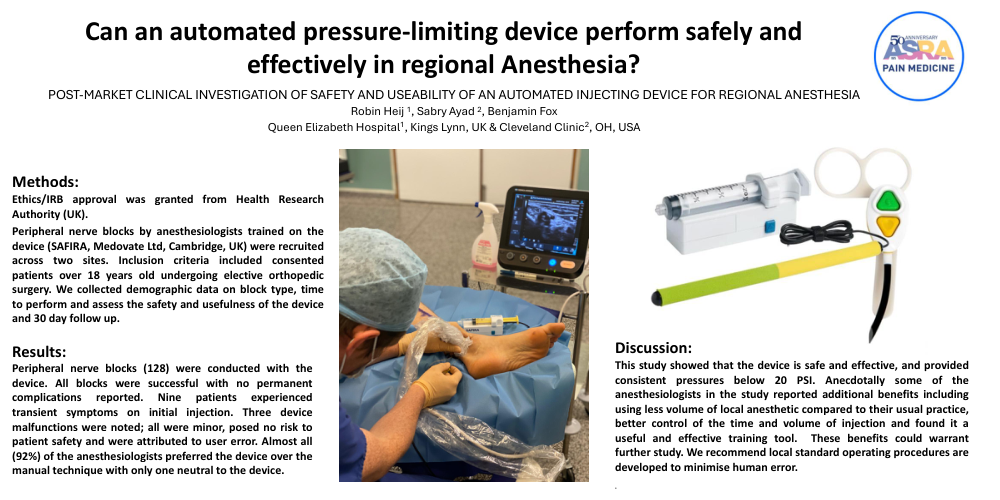
Peripheral nerve blocks by anesthesiologists trained on the device (SAFIRA, Medovate Ltd, Cambridge, UK) were recruited across two sites. Inclusion criteria included consented patients over 18 years old undergoing elective orthopedic surgery. We collected demographic data on block type, time to perform and assess the safety and usefulness of the device and 30 day follow up.
Results:
Peripheral nerve blocks (128) were conducted with the device. All blocks were successful with no permanent complications reported. Nine patients experienced transient symptoms on initial injection. Three device malfunctions were noted; all were minor, posed no risk to patient safety and were attributed to user error. Almost all (92%) of the anesthesiologists preferred the device over the manual technique with only one neutral to the device.
Discussion:
This study showed that the device is safe and effective, and provided consistent pressures below 20 PSI. Anecdotally some of the anesthesiologists in the study reported additional benefits including using less volume of local anesthetic compared to their usual practice, better control of the time and volume of injection and found it a useful and effective training tool. These benefits could warrant further study. We recommend local standard operating procedures are developed to minimise human error.