343 posters, 5 videos, 2 audios, 18 topics, 33 sessions, 263 authors, 202 institutions
ePostersLive by SciGen Technologies S.A. All rights reserved.
24th Annual Pain Medicine Meeting 2025
November 13-15, 2025| JW Marriott Austin, Austin, Texas

2198314
A Multimodal Approach to Refractory Pain After Brachial Plexus Avulsion Using Ketamine Infusion: A Case Report
Poster Presenter
Authors
Affiliations
Part of Topic
Medically Challenging Cases
Introduction:
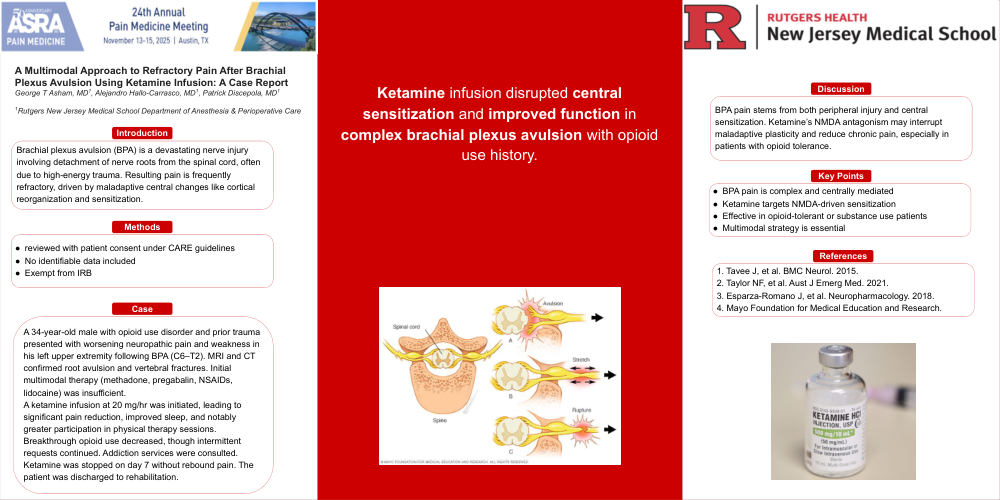
Brachial plexus avulsion (BPA) is a devastating nerve injury involving detachment of nerve roots from the spinal cord, often due to high-energy trauma. Resulting pain is frequently refractory, driven by maladaptive central changes like cortical reorganization and sensitization.
Methods:
This case was reviewed with patient consent under CARE guidelines. No identifiable data included. Exempt from IRB.
Case:
A 34-year-old male with opioid use disorder and prior trauma presented with worsening neuropathic pain and weakness in his left upper extremity following BPA (C6–T2). MRI and CT confirmed root avulsion and vertebral fractures. Initial multimodal therapy (methadone, pregabalin, NSAIDs, lidocaine) was insufficient.
A ketamine infusion at 20 mg/hr was initiated, leading to significant pain reduction, improved sleep, and notably greater participation in physical therapy sessions. Breakthrough opioid use decreased, though intermittent requests continued. Addiction services were consulted. Ketamine was stopped on day 7 without rebound pain. The patient was discharged to rehabilitation.
Discussion:
BPA pain stems from both peripheral injury and central sensitization. Ketamine’s NMDA antagonism may interrupt maladaptive plasticity and reduce chronic pain, especially in patients with opioid tolerance.
KEY POINTS:
- BPA pain is complex and centrally mediated
- Ketamine targets NMDA-driven sensitization
- Effective in opioid-tolerant or substance use patients
- Multimodal strategy is essential
Ketamine infusion disrupted central sensitization and improved function in complex brachial plexus avulsion with opioid use history.