343 posters, 5 videos, 2 audios, 18 topics, 33 sessions, 263 authors, 202 institutions
ePostersLive by SciGen Technologies S.A. All rights reserved.
24th Annual Pain Medicine Meeting 2025
November 13-15, 2025| JW Marriott Austin, Austin, Texas

2198273
Ultrasound-Guided Femoral & Popliteal Blocks for Below-Knee Amputation in CHF Exacerbation Patient on Anticoagulation
Poster Presenter
Authors
Affiliations
Part of Topic
Medically Challenging Cases
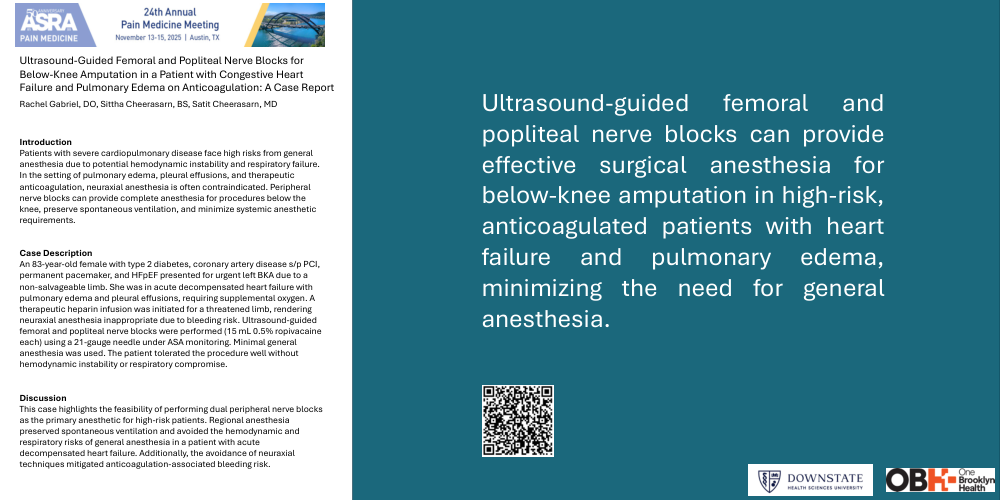
Ultrasound-Guided Femoral and Popliteal Nerve Blocks for Below-Knee Amputation in a Patient with Congestive Heart Failure and Pulmonary Edema on Anticoagulation: A Case Report
Rachel Gabriel, DO, Sittha Cheerasarn, BS, Satit Cheerasarn, MD
Introduction
Patients with severe cardiopulmonary disease face high risks from general anesthesia due to potential hemodynamic instability and respiratory failure. In the setting of pulmonary edema, pleural effusions, and therapeutic anticoagulation, neuraxial anesthesia is often contraindicated. Peripheral nerve blocks can provide complete anesthesia for procedures below the knee, preserve spontaneous ventilation, and minimize systemic anesthetic requirements.
Case Description
An 83-year-old female with type 2 diabetes, coronary artery disease s/p PCI, permanent pacemaker, and HFpEF presented for urgent left BKA due to a non-salvageable limb. She was in acute decompensated heart failure with pulmonary edema and pleural effusions, requiring supplemental oxygen. A therapeutic heparin infusion was initiated for a threatened limb, rendering neuraxial anesthesia inappropriate due to bleeding risk. Ultrasound-guided femoral and popliteal nerve blocks were performed (15 mL 0.5% ropivacaine each) using a 21-gauge needle under ASA monitoring. Minimal general anesthesia was used. The patient tolerated the procedure well without hemodynamic instability or respiratory compromise.
Discussion
This case highlights the feasibility of performing dual peripheral nerve blocks as the primary anesthetic for high-risk patients. Regional anesthesia preserved spontaneous ventilation and avoided the hemodynamic and respiratory risks of general anesthesia in a patient with acute decompensated heart failure. Additionally, the avoidance of neuraxial techniques mitigated anticoagulation-associated bleeding risk.