343 posters, 5 videos, 2 audios, 18 topics, 33 sessions, 263 authors, 202 institutions
ePostersLive by SciGen Technologies S.A. All rights reserved.
24th Annual Pain Medicine Meeting 2025
November 13-15, 2025| JW Marriott Austin, Austin, Texas

2194783
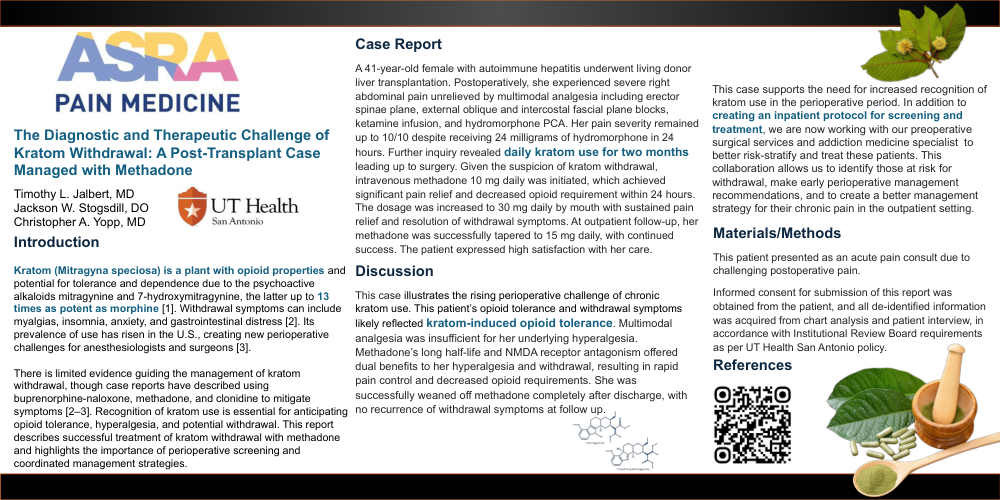
The Diagnostic and Therapeutic Challenge of Kratom Withdrawal: A Post-Transplant Case Managed with Methadone
Poster Presenter
Authors
Affiliations
Part of Topic
Medically Challenging Cases
Kratom (Mitragyna speciosa) is a plant with opioid properties and potential for tolerance and dependence due to the psychoactive alkaloids mitragynine and 7-hydroxymitragynine, the latter up to 13 times as potent as morphine [1]. Withdrawal symptoms can include myalgias, insomnia, anxiety, and gastrointestinal distress [2]. Its prevalence of use has risen in the U.S., creating new perioperative challenges for anesthesiologists and surgeons [3].
There is limited evidence guiding the management of kratom withdrawal, though case reports have described using buprenorphine-naloxone, methadone, and clonidine to mitigate symptoms [2–3]. Recognition of kratom use is essential for anticipating opioid tolerance, hyperalgesia, and potential withdrawal. This report describes successful treatment of kratom withdrawal with methadone and highlights the importance of perioperative screening and coordinated management strategies.
A 41-year-old female with autoimmune hepatitis underwent living donor liver transplantation. Postoperatively, she experienced severe right abdominal pain unrelieved by multimodal analgesia including erector spinae plane, external oblique and intercostal fascial plane blocks, ketamine infusion, and hydromorphone PCA. Her pain severity remained up to 10/10 despite receiving 24 milligrams of hydromorphone in 24 hours. Further inquiry revealed daily kratom use for two months leading up to surgery. Given the suspicion of kratom withdrawal, intravenous methadone 10 mg daily was initiated, which achieved significant pain relief and decreased opioid requirement within 24 hours. The dosage was increased to 30 mg daily by mouth with sustained pain relief and resolution of withdrawal symptoms. At outpatient follow-up, her methadone was successfully tapered to 15 mg daily, with continued success. The patient expressed high satisfaction with her care.
This case illustrates the rising perioperative challenge of chronic kratom use. This patient’s opioid tolerance and withdrawal symptoms likely reflectedkratom-induced opioid tolerance. Multimodal analgesia was insufficient for her underlying hyperalgesia. Methadone’s long half-life and NMDA receptor antagonism offered dual benefits to her hyperalgesia and withdrawal, resulting in rapid pain control and decreased opioid requirements. She was successfully weaned off methadone completely after discharge, with no recurrence of withdrawal symptoms at follow up.
This case supports the need for increased recognition of kratom use in the perioperative period. In addition to creating an inpatient protocol for screening and treatment, we are now working with our preoperative surgical services and addiction medicine specialist to better risk-stratify and treat these patients. This collaboration allows us to identify those at risk for withdrawal, make early perioperative management recommendations, and to create a better management strategy for their chronic pain in the outpatient setting.
This patient presented as an acute pain consult due to challenging postoperative pain.
Informed consent for submission of this report was obtained from the patient, and all de-identified information was acquired from chart analysis and patient interview, in accordance with Institutional Review Board requirements as per UT Health San Antonio policy.