343 posters, 5 videos, 2 audios, 18 topics, 33 sessions, 263 authors, 202 institutions
ePostersLive by SciGen Technologies S.A. All rights reserved.
24th Annual Pain Medicine Meeting 2025
November 13-15, 2025| JW Marriott Austin, Austin, Texas

2194700
Complex Regional Pain Syndrome (CRPS) Type 2 following Robotic Surgery
Poster Presenter
Authors
Affiliations
Part of Topic
Medically Challenging Cases
Complex Regional Pain Syndrome (CRPS) Type 2 following Robotic Surgery
Ochuko Ogbon, MD, Antoine Sioufi, MD, Penmetcha Taruna, MD, Azzam Alkhudari, MD
INTRODUCTION
-
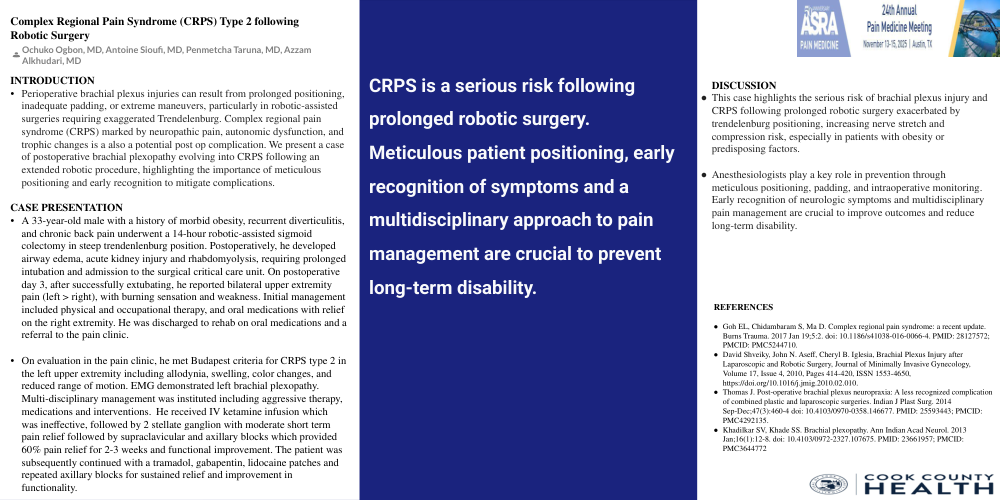
Perioperative brachial plexus injuries can result from prolonged positioning, inadequate padding, or extreme maneuvers, particularly in robotic-assisted surgeries requiring exaggerated Trendelenburg. Complex regional pain syndrome (CRPS) marked by neuropathic pain, autonomic dysfunction, and trophic changes is a also a potential post op complication. We present a case of postoperative brachial plexopathy evolving into CRPS following an extended robotic procedure, highlighting the importance of meticulous positioning and early recognition to mitigate complications.
CASE PRESENTATION
-
A 33-year-old male with a history of morbid obesity, recurrent diverticulitis, and chronic back pain underwent a 14-hour robotic-assisted sigmoid colectomy in steep trendenlenburg position. Postoperatively, he developed airway edema, acute kidney injury and rhabdomyolysis, requiring prolonged intubation and admission to the surgical critical care unit. On postoperative day 3, after successfully extubating, he reported bilateral upper extremity pain (left > right), with burning sensation and weakness. Initial management included physical and occupational therapy, and oral medications with relief on the right extremity. He was discharged to rehab on oral medications and a referral to the pain clinic.
-
On evaluation in the pain clinic, he met Budapest criteria for CRPS type 2 in the left upper extremity including allodynia, swelling, color changes, and reduced range of motion. EMG demonstrated left brachial plexopathy. Multi-disciplinary management was instituted including aggressive therapy, medications and interventions. He received IV ketamine infusion which was ineffective, followed by 2 stellate ganglion with moderate short term pain relief followed by supraclavicular and axillary blocks which provided 60% pain relief for 2-3 weeks and functional improvement. The patient was subsequently continued with a tramadol, gabapentin, lidocaine patches and repeated axillary blocks for sustained relief and improvement in functionality.
DISCUSSION
-
This case highlights the serious risk of brachial plexus injury and CRPS following prolonged robotic surgery exacerbated by trendelenburg positioning, increasing nerve stretch and compression risk, especially in patients with obesity or predisposing factors.
-
Anesthesiologists play a key role in prevention through meticulous positioning, padding, and intraoperative monitoring. Early recognition of neurologic symptoms and multidisciplinary pain management are crucial to improve outcomes and reduce long-term disability.