343 posters, 5 videos, 2 audios, 18 topics, 33 sessions, 263 authors, 202 institutions
ePostersLive by SciGen Technologies S.A. All rights reserved.
24th Annual Pain Medicine Meeting 2025
November 13-15, 2025| JW Marriott Austin, Austin, Texas

2193775
Silent Seeds: A Case of Delayed SCS Infection in the Setting of Immunosuppression and Recent Dental Procedure
Poster Presenter
Part of Topic
Medically Challenging Cases
Introduction
•Spinal cord stimulation (SCS) is an established therapy for refractory neuropathic pain in well selected patients.
•Surgical site infections (2.8–10%), most often involving the implantable pulse generator (IPG) pocket, may necessitate device explantation and interrupt therapy.
•Immunosuppressive therapy (e.g., methotrexate,) may impair wound healing and increase susceptibility to infection.
•Transient bacteremia from dental or invasive procedures can cause hematogenous seeding of implanted devices, particularly in immunosuppressed hosts. Infection prophylaxis recommendations for dental procedures in SCS patients remain inconsistent, requiring individualized risk assessment.
•Pain physicians should maintain high clinical suspicion for delayed or subtle infections, even in afebrile patients on DMARDs or steroids. Prompt imaging, culture-guided antibiotics, and device removal when indicated are essential to prevent epidural or systemic spread.
•This case highlights a delayed SCS infection following dental extraction in a methotrexate-treated rheumatoid arthritis patient, emphasizing the importance of appropriate patient selection and early recognition of complications.
Case Report
•60-year-old man with rheumatoid arthritis on methotrexate and prednisone underwent Boston Scientific SCS implantation on 01/16/2025 for chronic neuropathic pain.
•Five months post-implant, developed swelling, erythema, and drainage over the IPG site.
•Symptoms appeared one week after a dental extraction for a recent dental infection.
•Denied fever, chills, or night sweats; exam revealed boggy, erythematous IPG pocket with cellulitic changes.
•Vitals: HR 103, BP 92/58, afebrile. Labs: WBC 18.8, CRP 13.5, ESR 59.
•POCUS: Cobblestoning with localized fluid collection.
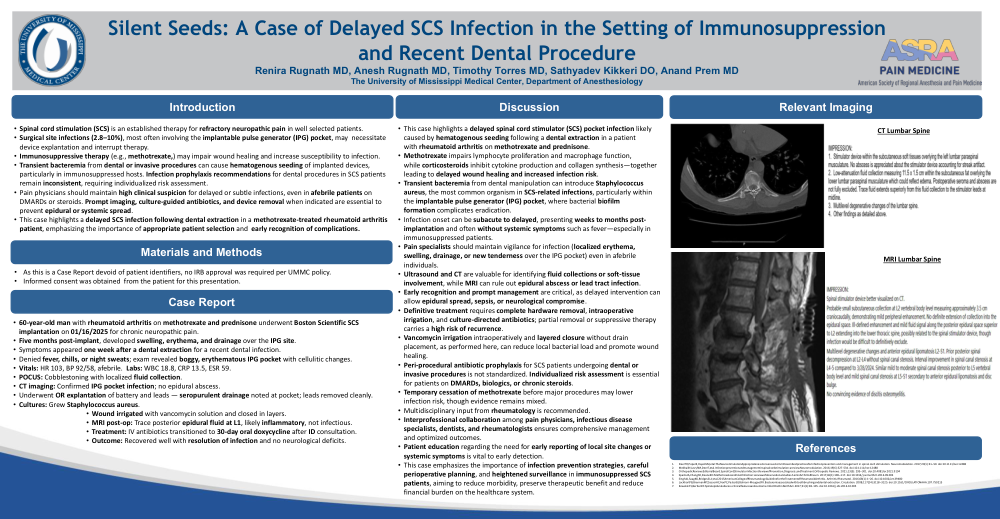
•CT imaging: Confirmed IPG pocket infection; no epidural abscess.
•Underwent OR explantation of battery and leads — seropurulent drainage noted at pocket; leads removed cleanly.
•Cultures: Grew Staphylococcus aureus.
•Wound irrigated with vancomycin solution and closed in layers.
•MRI post-op: Trace posterior epidural fluid at L1, likely inflammatory, not infectious.
•Treatment: IV antibiotics transitioned to 30-day oral doxycycline after ID consultation.
•Outcome: Recovered well with resolution of infection and no neurological deficits.
Discussion
•This case highlights a delayed spinal cord stimulator (SCS) pocket infection likely caused by hematogenous seeding following a dental extraction in a patient with rheumatoid arthritis on methotrexate and prednisone.
•Methotrexate impairs lymphocyte proliferation and macrophage function, while corticosteroids inhibit cytokine production and collagen synthesis—together leading to delayed wound healing and increased infection risk.
•Transient bacteremia from dental manipulation can introduce Staphylococcus aureus, the most common organism in SCS-related infections, particularly within the implantable pulse generator (IPG) pocket, where bacterial biofilm formation complicates eradication.
•Infection onset can be subacute to delayed, presenting weeks to months post-implantation and often without systemic symptoms such as fever—especially in immunosuppressed patients.
•Pain specialists should maintain vigilance for infection (localized erythema, swelling, drainage, or new tenderness over the IPG pocket) even in afebrile individuals.
•Ultrasound and CT are valuable for identifying fluid collections or soft-tissue involvement, while MRI can rule out epidural abscess or lead tract infection.
•Early recognition and prompt management are critical, as delayed intervention can allow epidural spread, sepsis, or neurological compromise.
•Definitive treatment requires complete hardware removal, intraoperative irrigation, and culture-directed antibiotics; partial removal or suppressive therapy carries a high risk of recurrence.
•Vancomycin irrigation intraoperatively and layered closure without drain placement, as performed here, can reduce local bacterial load and promote wound healing.
•Peri-procedural antibiotic prophylaxis for SCS patients undergoing dental or invasive procedures is not standardized. Individualized risk assessment is essential for patients on DMARDs, biologics, or chronic steroids.
•Temporary cessation of methotrexate before major procedures may lower infection risk, though evidence remains mixed.
•Multidisciplinary input from rheumatology is recommended.
•Interprofessional collaboration among pain physicians, infectious disease specialists, dentists, and rheumatologists ensures comprehensive management and optimized outcomes.
•Patient education regarding the need for early reporting of local site changes or systemic symptoms is vital to early detection.
•This case emphasizes the importance of infection prevention strategies, careful perioperative planning, and heightened surveillance in immunosuppressed SCS patients, aiming to reduce morbidity, preserve therapeutic benefit and reduce financial burden on the healthcare system.