343 posters, 5 videos, 2 audios, 18 topics, 33 sessions, 263 authors, 202 institutions
ePostersLive by SciGen Technologies S.A. All rights reserved.
24th Annual Pain Medicine Meeting 2025
November 13-15, 2025| JW Marriott Austin, Austin, Texas

2190306
Chronic Pain Resolution Following Tumor Ablation and Cementoplasty for Vertebral Lesions in Post-Prostate Cancer Patient
Poster Presenter
Authors
Affiliations
Part of Topic
Medically Challenging Cases
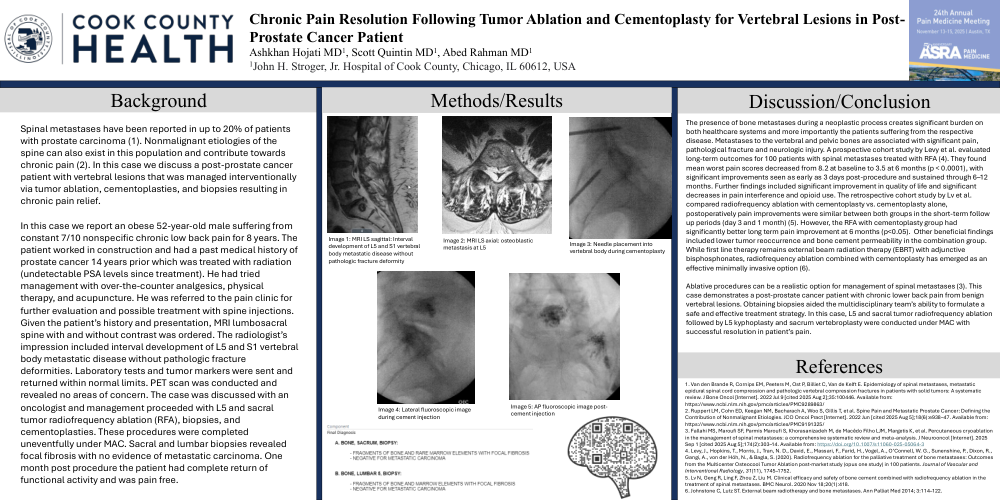
Spinal metastases have been reported in up to 20% of patients with prostate carcinoma. Nonmalignant etiologies of the spine can also exist in this population and contribute towards chronic pain. In this case we discuss a post-prostate cancer patient with vertebral lesions that was managed interventionally via tumor ablation, cementoplasties, and biopsies resulting in chronic pain relief. In this case we report an obese 52-year-old male suffering from constant 7/10 nonspecific chronic low back pain for 8 years. The patient worked in construction and had a past medical history of prostate cancer 14 years prior which was treated with radiation (undetectable PSA levels since treatment). He had tried management with over-the-counter analgesics, physical therapy, and acupuncture. He was referred to the pain clinic for further evaluation and possible treatment with spine injections. Given the patient’s history and presentation, MRI lumbosacral spine with and without contrast was ordered. The radiologist’s impression included interval development of L5 and S1 vertebral body metastatic disease without pathologic fracture deformities. Laboratory tests and tumor markers were sent and returned within normal limits. PET scan was conducted and revealed no areas of concern. The case was discussed with an oncologist and management proceeded with L5 and sacral tumor radiofrequency ablation (RFA), biopsies, and cementoplasties. These procedures were completed uneventfully under MAC. Sacral and lumbar biopsies revealed focal fibrosis with no evidence of metastatic carcinoma. One month post procedure the patient had complete return of functional activity and was pain free.