343 posters, 5 videos, 2 audios, 18 topics, 33 sessions, 263 authors, 202 institutions
ePostersLive by SciGen Technologies S.A. All rights reserved.
24th Annual Pain Medicine Meeting 2025
November 13-15, 2025| JW Marriott Austin, Austin, Texas

2185273
Pain management in semaglutide induced leukoclastic vasculitis
Poster Presenter
Authors
Affiliations
Part of Topic
Medically Challenging Cases
Pain management in semaglutide induced leukoclastic vasculitis
Introduction:
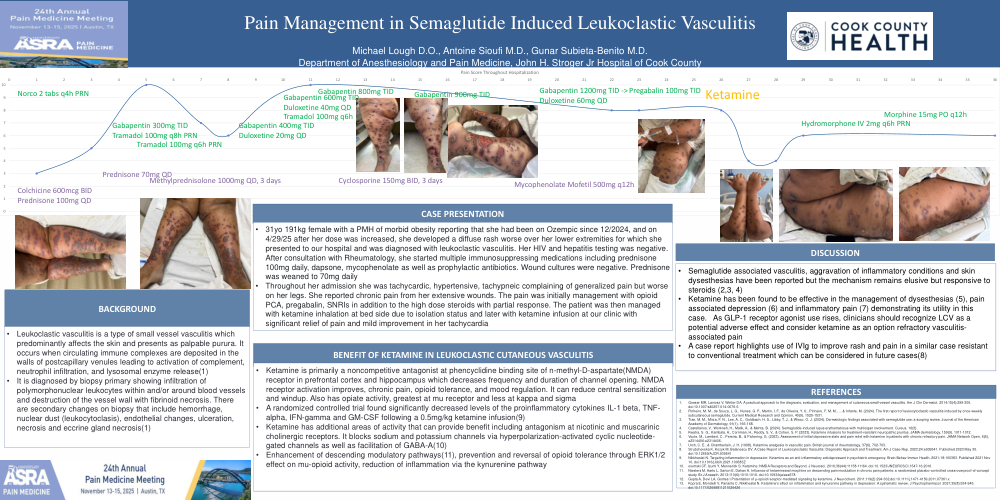
The polymodal mechanism of pain from vasculitis (somatic, neuropathic and nociplastic) often makes it difficult to control, resulting in chronic pain that affects every aspect of a patient’s life. It limits mobility, reduces appetite, disturbs sleep, increases social isolation, and can lead to depression. We present a case in which despite aggressive multimodal therapies, ketamine appeared to provide additional therapeutic benefit.
Materials and methods:
IRB declaration: As the case report is devoid of patient identifiable information, it is exempt from IRB review requirements as per (name of organization) policy.
Case report:
31yo female with a PMH of morbid obesity reporting that she had been on Ozempic since 12/2024, and on 4/29/25 after her dose was increased, she developed a diffuse rash worse over her lower extremities for which she presented to our hospital and was diagnosed with leukoclastic vasculitis. Her HIV and hepatitis testing was negative. After consultation with Rheumatology, she started multiple immunosuppressing medications including prednisone 100mg daily, dapsone, mycophenolate as well as prophylactic antibiotics. Wound cultures were negative. Prednisone was weaned to 70mg daily.
Throughout her admission she was tachycardic, hypertensive, tachypneic complaining of generalized pain but worse on her legs. She reported chronic pain from her extensive wounds. The pain was initially management with opioid PCA, pregabalin, SNRIs in addition to the high dose steroids with partial response. The patient was then managed with ketamine inhalation at bed side due to isolation status and later with ketamine infusion at our clinic with significant relief of pain and mild improvement in her tachycardia.
Discussion:
Simaglutide associated vasculitis, aggravation of inflammatory conditions and skin dysesthesias have been reported but the mechanism remains elusive but responsive to steroids (1,2,3).
Ketamine has been found to be effective in the management of dysesthesias (4), pain associated depression (5) and inflammatory pain (6) demonstrating its utility in this case.
As GLP-1 receptor agonist use rises, clinicians should recognize LCV as a potential adverse effect and consider ketamine as an option refractory vasculitis-associated pain.