126 posters, 2 topics, 27 sessions, 324 authors, 82 institutions
ePostersLive by SciGen Technologies S.A. All rights reserved.
2025 ACP Annual Session
October 22 - 25, 2025 | New Orleans, US

193
Prosthodontic Management of a Patient with Hutchinson-Gilford Progeria Syndrome
Poster Presenter
Authors
Danyelle Molayem, Nicole Newberry, Radi Masri, Carl Driscoll
Affiliations
Part of Topic
Case Presentation
Prosthodontic Rehabilitation in a Patient with Hutchinson-Gilford Progeria Syndrome
Danyelle Molayem, DDS; Radi Masri, DDS, MS, PhD; Tintu Chandy, DDS, MS; Carl Driscoll, DMD, Nicole Newberry, DMD, MS
Introduction
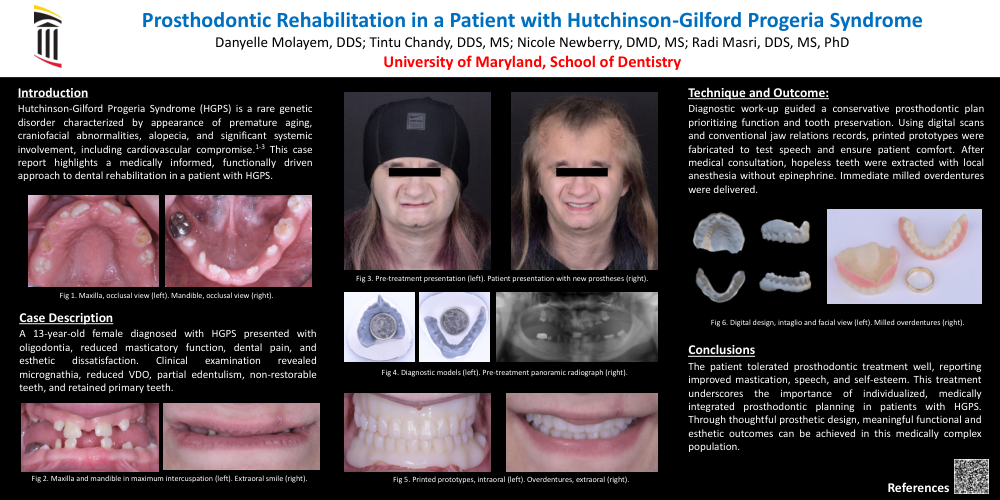
Hutchinson-Gilford Progeria Syndrome (HGPS) is a rare genetic disorder characterized by appearance of premature aging, craniofacial abnormalities, alopecia, and significant systemic involvement, including cardiovascular compromise.1-3 This case report highlights a medically informed, functionally driven approach to dental rehabilitation in a patient with HGPS.
Case Description
A 13-year-old female diagnosed with HGPS presented with oligodontia, reduced masticatory function, and esthetic dissatisfaction. Clinical examination revealed micrognathia, reduced VDO, partial edentulism, and retained primary teeth. Diagnostic work-up guided a conservative prosthodontic plan prioritizing function, tooth preservation, and patient comfort.
Technique and Outcome:
Diagnostic work-up guided a conservative prosthodontic plan prioritizing function, tooth preservation, and patient comfort. Using digital scans and conventional jaw relations records, printed prototypes were used to test speech and patient comfort. After medical consultation, hopeless teeth were extracted with local anesthesia without epinephrine and milled overdentures were delivered. The patient tolerated prosthodontic treatment well, reporting improved mastication, speech, and self-esteem.
Conclusions
This treatment underscores the importance of individualized, medically integrated prosthodontic planning in patients with Hutchinson-Gilford Progeria Syndrome. Through thoughtful prosthetic design, meaningful functional and esthetic outcomes can be achieved in this medically complex population.