126 posters, 2 topics, 27 sessions, 324 authors, 82 institutions
ePostersLive by SciGen Technologies S.A. All rights reserved.
2025 ACP Annual Session
October 22 - 25, 2025 | New Orleans, US

113
Prosthodontic Challenges in Blepharocheilodontic Syndrome Patients.
Poster Presenter
Authors
Affiliations
Part of Topic
Case Presentation
Prosthodontic challenges in Blepharocheilodontic Syndrome patients
Marta Flores, BDS, MSc, PhD*
Amara Abreu, DDS, MSD, FACP
UNC – Prosthodontic Clinic
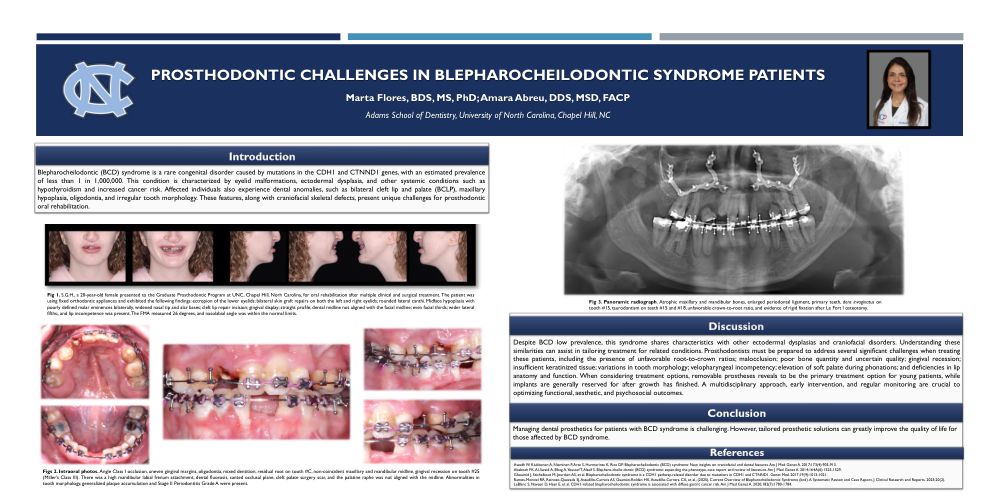
Abstract: Blepharocheilodontic (BCD) syndrome is a rare congenital disorder caused by mutations in the CDH1 and CTNND1 genes, with an estimated prevalence of less than 1 in 1,000,000. This condition is characterized by eyelid malformations, including ectropion, euryblepharon, lagophthalmia, and distichiasis. Affected individuals also experience dental anomalies, such as bilateral cleft lip and palate (BCLP), oligodontia, and irregular tooth morphology. These features, along with craniofacial skeletal defects, present unique challenges for prosthodontic oral rehabilitation. Objectives: The main objectives of this presentation are to present a clinical case in its initial phase, provide an overview of BCD syndrome, highlight the challenges that prosthodontists may face when treating these patients, and discuss potential treatment options. Case history: A 20-year-old female patient presented to the UNC Prosthodontic Clinic with various oral manifestations: multiple missing teeth, lip deficiency and incompetency, a repaired cleft lip/palate, oligodontia, abnormal tooth morphology, alveolar ridge resorption, and velopharyngeal dysfunction. Discussion: Despite BCD low prevalence, this syndrome shares characteristics with other ectodermal dysplasias and craniofacial disorders. Understanding these similarities can assist in tailoring treatment for related conditions. When considering treatment options, removable prostheses reveals to be the primary treatment option for young patients, while implants are generally reserved for after growth has finished. A multidisciplinary approach, early intervention, and regular monitoring are crucial to optimizing functional, aesthetic, and psychosocial outcomes. Conclusion: Managing dental prosthetics for patients with BCD syndrome is challenging. However, tailored prosthetic solutions can greatly improve the quality of life for those affected by BCD syndrome.
Keywords: Blepharocheilodontic syndrome; CDH1 and CTNND1 mutation; dental prosthodontics.