206 posters, 13 topics, 5 sessions, 713 authors, 293 institutions
ePostersLive by SciGen Technologies S.A. All rights reserved.
AAPS 104th Annual Meeting
May 2-5, 2026 | Lihue, HI

D47
Cost Comparison Of Acellular Dermal Matrix, Laser Hair Removal, And Electrolysis In Primary Gender-affirming Vaginoplasty: Barriers In The Preoperative Phase
Poster Presenter
Authors
David Le, Malka Korenblit, Zain Aryanpour, David Mathes, Ty Higuchi, Christodoulos Kaoutzanis
Affiliations
Department of Surgery, University of Colorado Anschutz Medical Campus, Division of Plastic and Reconstructive Surgery, University of Colorado Anschutz Medical Campus, Division of Urology, University of Colorado Anschutz Medical Campus
Part of Topic
Gender Affirmation
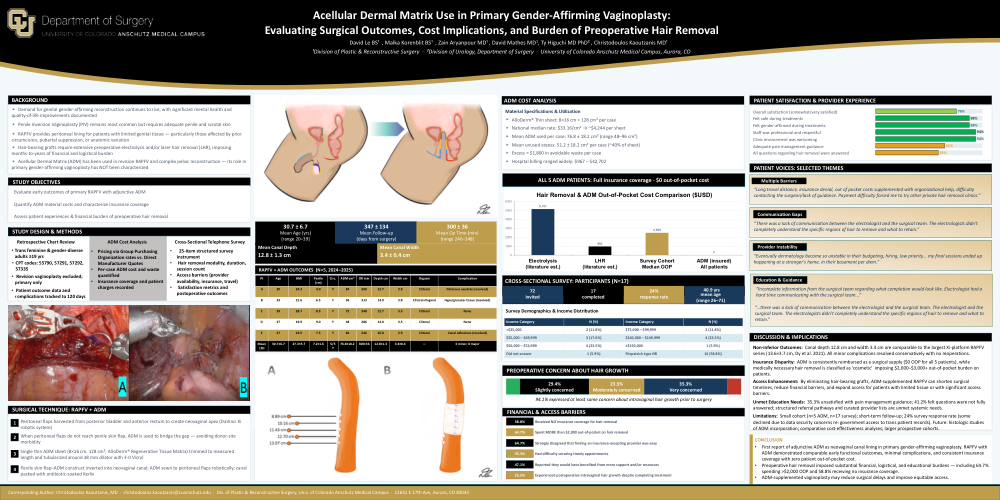
Acellular Dermal Matrix Use in Primary Gender-Affirming Vaginoplasty: Evaluating Surgical Outcomes, Cost Implications, and Burden of Preoperative Hair-Removal
Demand for gender-affirming vaginoplasty is increasing, but limited native genital tissue and 28 burdensome preoperative hair removal can restrict surgical options and delay access to care. We sought to evaluate early outcomes of primary robotic-assisted peritoneal flap vaginoplasty (RAPFV) with adjunctive acellular dermal matrix (ADM), characterize ADM-related costs, and assess patient experiences with preoperative hair removal.
This single-center mixed-methods study included a retrospective chart review of trans feminine and gender-diverse adults undergoing primary full-depth vaginoplasty, a focused evaluation of patients who underwent RAPFV with ADM, an ADM cost analysis, and a cross-sectional telephone survey of patients who required preoperative hair removal.
Five patients underwent primary RAPFV with ADM between 2024 and 2025, and all reported excellent canal dimensions and reported preserved sexual function and full coverage of their procedure and ADM materials used while survey determined pre-operative hair removal burden was substantial, featuring high out of pocket costs and educational gaps.
Primary RAPFV with adjunctive ADM demonstrated favorable early functional outcomes and minimal complications while avoiding the substantial financial and logistical burdens associated with preoperative hair removal, supporting its promise as an access-enhancing option in gender affirming vaginoplasty.