241 posters, 10 topics, 7 sessions, 899 authors, 296 institutions
ePostersLive by SciGen Technologies S.A. All rights reserved.
The AAPS 103rd Annual Meeting 2025
May 24-27, 2025 | Austin, Texas

D65
A Decade Of Medicare Part B Reimbursement To Plastic Surgeons: Gender Pay Gaps Continue To Persist
Poster Presenter
Authors
Affiliations
Part of Topic
Education/Practice Management/Other
A Decade of Medicare Part B Reimbursement to Plastic Surgeons: Gender Pay Gaps Continue to Persist
Raymond Wen BS1, Sacha C. Hauc, M.P.H., M.D. 1, Jeffrey E. Janis M.D., FACS1
1. Department of Plastic and Reconstructive Surgery, The Ohio State University College of Medicine, Columbus, OH, USA
INTRODUCTION
Persistent Gender Pay Gap: Despite increasing female representation in medicine, gender-based compensation disparities persist across specialties1,2.
Systemic Barriers to Equity: Female surgeons face underrepresentation, bias, and barriers to equal pay, influenced by academic rank, industry payments, career advancement, and research productivity3,4,7,14,15,16,17.
Medicare and Compensation Disparities: Research shows that female surgeons receive lower industry payments6, lower reimbursement rates, and perform fewer procedures compared to male colleagues7-12. These disparities can impact patient care and healthcare outcomes5.
Pay Gaps Across Specialties: Notable gender pay gaps exist in neurosurgery, colorectal surgery, and orthopedic surgery4,7,8. Plastic and Reconstructive Surgery (PRS) follows this trend, with a national survey revealing a significant gender-based wage difference among board-certified plastic surgeons13.
Medicare’s Role in Income: Medicare Part B reimburses surgical procedures, supplies, and follow-up care, making it a key revenue source for plastic surgeons. However, gender-based disparities within Medicare’s reimbursement model remain unexamined.
Study Objective: This study analyzes a decade (2013-2022) of Medicare Part B reimbursement data to identify gender-based pay disparities in plastic surgery and inform strategies for equitable compensation.
AIM
This study examines gender-based disparities in Medicare Part B reimbursements among plastic surgeons from 2013-2022. We use CMS data to assess pay differences, practice patterns, and geographic variations while controlling for key factors such as procedure volume, billing practices, and patient demographics
METHODS
This investigation utilized the Centers for Medicare & Medicaid Services (CMS) data (2013 to 2022), analyzing 42,000+ physician entries.
Statistical analysis
Baseline characteristics analyzed using t-tests, ANOVA (continuous variables), and chi-square test (categorical variables).
ANCOVA models estimated average gender-based pay differences between male and female plastic surgeons.
Controlled for States, rural-urban designation, year of service, total annual services, unique CPT codes, number of beneficiaries,Patient morbidity risk scores
Adjusted models isolated the impact of gender on Medicare reimbursement.
RESULTS
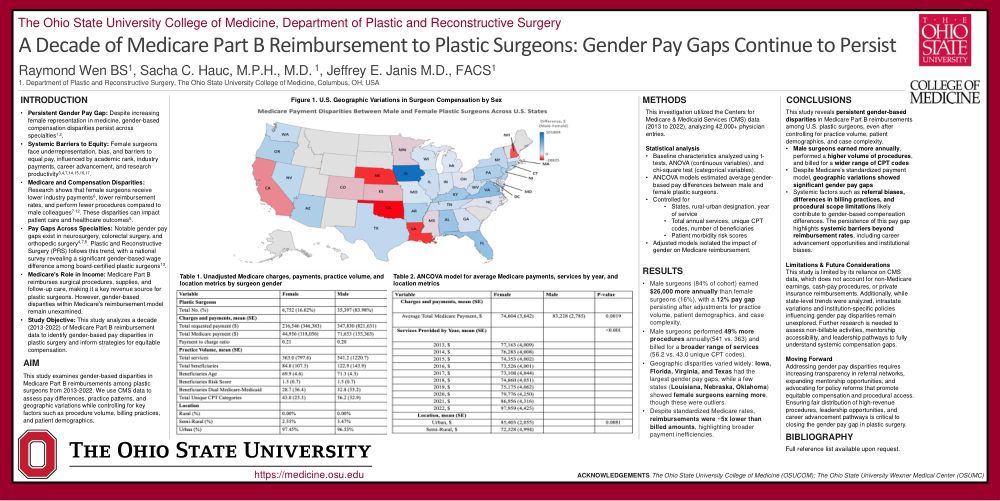
Male surgeons (84% of cohort) earned $26,000 more annually than female surgeons (16%), with a 12% pay gap persisting after adjustments for practice volume, patient demographics, and case complexity.
Male surgeons performed 49% more procedures annually(541 vs. 363) and billed for a broader range of services (56.2 vs. 43.0 unique CPT codes).
Geographic disparities varied widely: Iowa, Florida, Virginia, and Texas had the largest gender pay gaps, while a few states (Louisiana, Nebraska, Oklahoma) showed female surgeons earning more, though these were outliers.
Despite standardized Medicare rates, reimbursements were ~5x lower than billed amounts, highlighting broader payment inefficiencies.
CONCLUSIONS
This study reveals persistent gender-based disparities in Medicare Part B reimbursements among U.S. plastic surgeons, even after controlling for practice volume, patient demographics, and case complexity.
Male surgeons earned more annually, performed a higher volume of procedures, and billed for a wider range of CPT codes
Despite Medicare’s standardized payment model, geographic variations showed significant gender pay gaps
Systemic factors such as referral biases, differences in billing practices, and procedural scope limitations likely contribute to gender-based compensation differences. The persistence of this pay gap highlights systemic barriers beyond reimbursement rates, including career advancement opportunities and institutional biases.
Limitations & Future Considerations
This study is limited by its reliance on CMS data, which does not account for non-Medicare earnings, cash-pay procedures, or private insurance reimbursements. Additionally, while state-level trends were analyzed, intrastate variations and institution-specific policies influencing gender pay disparities remain unexplored. Further research is needed to assess non-billable activities, mentorship accessibility, and leadership pathways to fully understand systemic compensation gaps.
Moving Forward
Addressing gender pay disparities requires increasing transparency in referral networks, expanding mentorship opportunities, and advocating for policy reforms that promote equitable compensation and procedural access. Ensuring fair distribution of high-revenue procedures, leadership opportunities, and career advancement pathways is critical to closing the gender pay gap in plastic surgery.
BIBLIOGRAPHY
Full reference list available upon request.