4,068 posters, 219 videos, 101 topics, 69 sessions, 14,365 authors, 6,128 institutions
ePostersLive by SciGen Technologies S.A. All rights reserved.
Alzheimer's Association International Conference 2026
July 12-15, 2026 | London, United Kingdom, and Online

13047
Poor Sleep Amplifies Depression-plasma GFAP Association In Spousal Caregivers Of Individuals With Cognitive Decline
Poster Presenter
Authors
Hae Lim Sim, Byung Hyug Choi, Hyun Sun Ham, Yoon Jung Woo, Hee Won Yang, So Yeon Jeon
Affiliations
Seoul National University College of Medicine, Seoul, Republic of Korea, Department of Psychiatry, Seoul Metropolitan Government-Seoul National University Boramae Medical Center, Seoul, Republic of Korea, Department of Psychiatry, Chungnam National University Hospital, Daejeon, Republic of Korea, Department of Psychiatry, Seoul Metropolitan Government-Seoul National University Boramae Medical Center, Seoul, Republic of Korea, Department of Psychiatry, Seoul National University College of Medicine, Seoul, Republic of Korea
Part of Topic
Dementia Care and Psychosocial Factors -> Psychosocial and Behavioral Factors -> Family/informal caregiving
Title: Poor sleep Amplifies Depression - Plasma GFAP Association in Spousal Caregivers of Individuals with Cognitive Decline
Authors: Hae Lim Sim¹, Byung Hyug Choi², Hyun Sun Ham², Yoon Jung Woo², Hee Won Yang³, So Yeon Jeon²,⁴
Affiliations: ¹Seoul National University College of Medicine, Seoul, Republic of Korea ²Department of Psychiatry, Seoul Metropolitan Government-Seoul National University Boramae Medical Center, Seoul, Republic of Korea ³Department of Psychiatry, Chungnam National University Hospital, Daejeon, Republic of Korea ⁴Department of Psychiatry, Seoul National University College of Medicine, Seoul, Republic of Korea
INTRODUCTION
Background
- Spousal caregivers (SCGs) of individuals with cognitive decline experience chronic stress, which is a known risk factor for accelerated neurodegeneration. GFAP is sensitive to stress-induced brain changes.
- The glymphatic system clears neurotoxic proteins primarily during sleep; thus, sleep disturbance - common among caregivers - may impair this mechanism and elevate plasma GFAP.
Objective
- To investigate whether modifiable lifestyle factors, such as sleep quality, moderate the impact of caregiving burden on Alzheimer's disease biomarkers.
Hypothesis
- Poor sleep quality amplifies the association between caregiver depression and plasma GFAP.
METHODS
Subjects (Total N=151)
- Recruited from a geriatric neuropsychiatric clinic from May 2020 - November 2024.
- Spousal caregivers of individuals with cognitive decline who did not have dementia or MCI.
Clinical assessments
- Spousal caregivers: Geriatric Depression Scale (GDS) for caregiving-related depression; Pittsburgh Sleep Quality Index (PSQI) for quality of sleep; International Physical Activity Questionnaire (IPAQ) for physical activity.
- Care-recipients: Mini-Mental State Examination (MMSE) for global cognitive function; Neuropsychiatric Inventory (NPI) for neuropsychiatric symptoms.
Measurement of plasma biomarkers
- Neurobiological biomarkers known to be related to Alzheimer's Disease were measured using Simoa technology: p-Tau 217, a biomarker of amyloid pathology; Glial Fibrillary Acidic Protein (GFAP), a biomarker of neuroinflammation; Neurofilament Light chain (NfL), a biomarker of neurodegeneration.
Statistical Analysis
- Moderated regression analyses were conducted using the PROCESS macro for SPSS (Hayes, 2017). Bootstrapping with 5,000 resamples and 95% bias-corrected confidence intervals was used to test the significance of main effects and interaction effects. Adjusted for age, sex, APOE4 positivity, and clinical diagnosis of care-recipients. Simple slope analyses were conducted only when interactions reached statistical significance (p<0.05).
RESULTS
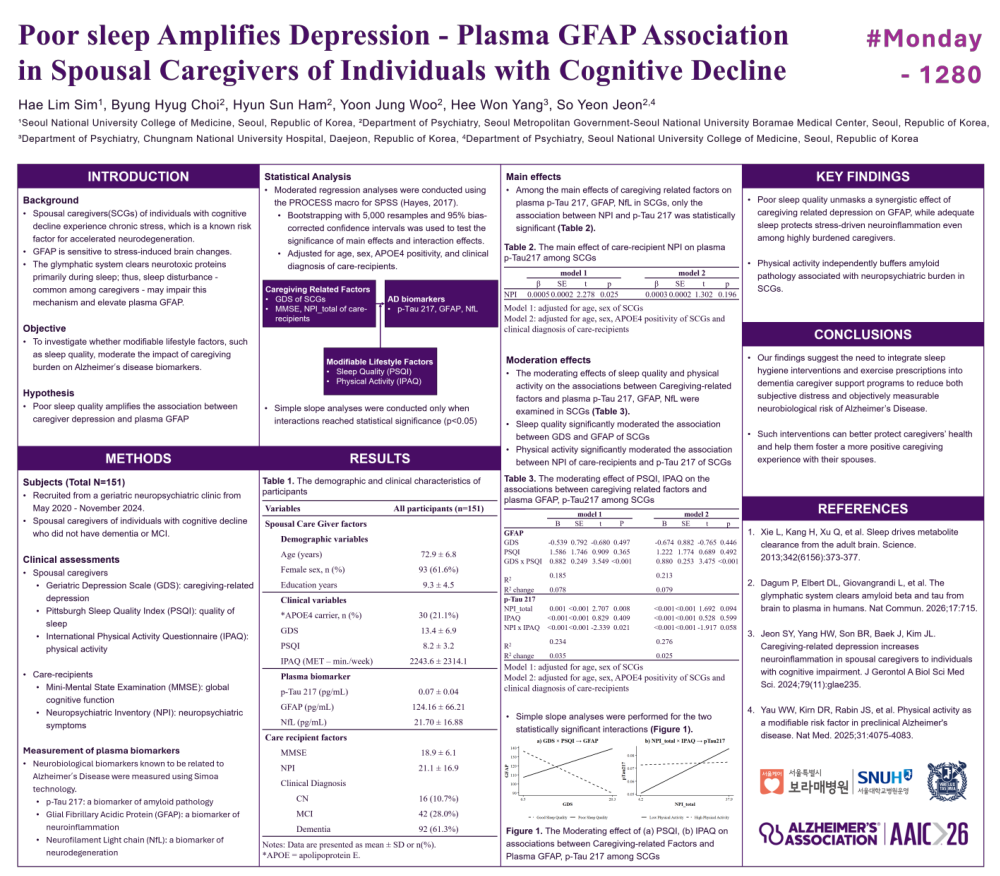
Table 1 summarizes the demographic and clinical characteristics of participants (N=151), including spousal caregiver demographic and clinical variables, plasma biomarker levels, and care-recipient clinical characteristics (MMSE, NPI, and clinical diagnosis: CN, MCI, Dementia).
Among the main effects of caregiving-related factors on plasma p-Tau 217, GFAP, and NfL in SCGs, only the association between NPI and p-Tau 217 was statistically significant (Table 2).
The moderating effects of sleep quality and physical activity on the associations between caregiving-related factors and plasma p-Tau 217, GFAP, NfL were examined in SCGs (Table 3). Sleep quality significantly moderated the association between GDS and GFAP of SCGs. Physical activity significantly moderated the association between NPI of care-recipients and p-Tau 217 of SCGs. Simple slope analyses were performed for the two statistically significant interactions (Figure 1).
CONCLUSIONS
Our findings suggest the need to integrate sleep hygiene interventions and exercise prescriptions into dementia caregiver support programs to reduce both subjective distress and objectively measurable neurobiological risk of Alzheimer's Disease. Such interventions can better protect caregivers' health and help them foster a more positive caregiving experience with their spouses.
REFERENCES
- Xie L, Kang H, Xu Q, et al. Sleep drives metabolite clearance from the adult brain. Science. 2013;342(6156):373-377.
- Dagum P, Elbert DL, Giovangrandi L, et al. The glymphatic system clears amyloid beta and tau from brain to plasma in humans. Nat Commun. 2026;17:715.
- Jeon SY, Yang HW, Son BR, Baek J, Kim JL. Caregiving-related depression increases neuroinflammation in spousal caregivers to individuals with cognitive impairment. J Gerontol A Biol Sci Med Sci. 2024;79(11):glae235.
- Yau WW, Kirn DR, Rabin JS, et al. Physical activity as a modifiable risk factor in preclinical Alzheimer's disease. Nat Med. 2025;31:4075-4083.
Comments
Email is required but is not shown publicly.
Loading comments...