4,068 posters, 219 videos, 101 topics, 69 sessions, 14,365 authors, 6,128 institutions
ePostersLive by SciGen Technologies S.A. All rights reserved.
Alzheimer's Association International Conference 2026
July 12-15, 2026 | London, United Kingdom, and Online

12869
Challenges, Needs, And Associated Factors In Long-term Care For Dementia Patients
Poster Presenter
Part of Topic
Dementia Care and Psychosocial Factors -> Dementia Care and Health Services Research -> Long-term care and direct care (e.g., environmental design, technology)
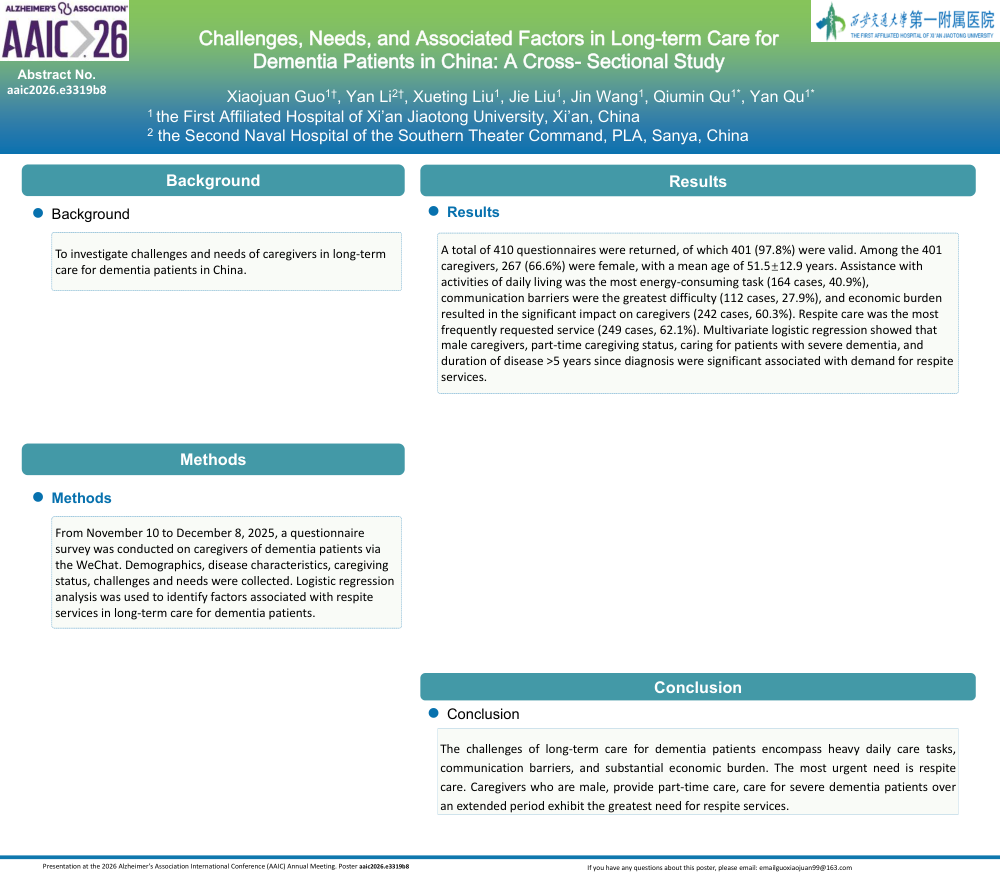
Objective To investigate the challenges and needs of caregivers in long-term care for dementia patients. Methods From November 10 to December 8, 2025, a questionnaire was distributed to caregivers of dementia patients via the WeChat (Wenjuanxing). Data collected including demographics, disease characteristics, caregiving status, and the challenges and needs of caregivers in long-term care. Logistic regression analysis was performed to identify factors associated with caregivers' demand for respite services. Results A total of 410 questionnaires were returned, of which 401 (97.8%) were valid. Among the 401 caregivers, 267 (66.6%) were female, with a mean age of 51.5±12.9 years. Assistance with activities of daily living was the most energy-consuming task (164 cases, 40.9%), communication barriers were the greatest difficulty (112 cases, 27.9%), and economic burden resulted in the significant impact on caregivers (242 cases, 60.3%). Respite care was the most frequently requested service (249 cases, 62.1%). Multivariate logistic regression showed that male caregivers (OR=2.201, 95% CI: 1.328-3.649), part-time caregiving status (OR=2.012, 95% CI: 1.071-3.778), caring for patients with severe dementia (OR=1.626, 95% CI: 1.111-2.379), and the duration >5 years since diagnosis (OR=1.363, 95% CI: 1.059-1.755) were significant associated with higher demand for respite services. Conclusion The challenges of long-term care for dementia patients encompass heavy daily care tasks, communication barriers, and substantial economic burden, and the most urgent need is respite care. Caregivers who are male, provide part-time care, or care for patients with severe dementia over an extended period exhibit the greatest need for respite services and warrant special attention.
Comments
Email is required but is not shown publicly.
Loading comments...